Q1 2026 Market Outlook: Identifying Undervalued Assets
Understanding the Q1 2026 market outlook is crucial for identifying undervalued assets, as economic shifts create both challenges and strategic investment opportunities.
As we step into the first quarter of 2026, the financial landscape continues to evolve, presenting both challenges and compelling opportunities for astute investors. This period demands a nuanced approach to asset allocation, focusing on identifying those often-overlooked gems. Our deep dive into the Q1 2026 market outlook aims to equip you with the insights needed to navigate these waters successfully, uncovering sectors and companies poised for significant growth.
Understanding the Current Economic Climate in Q1 2026
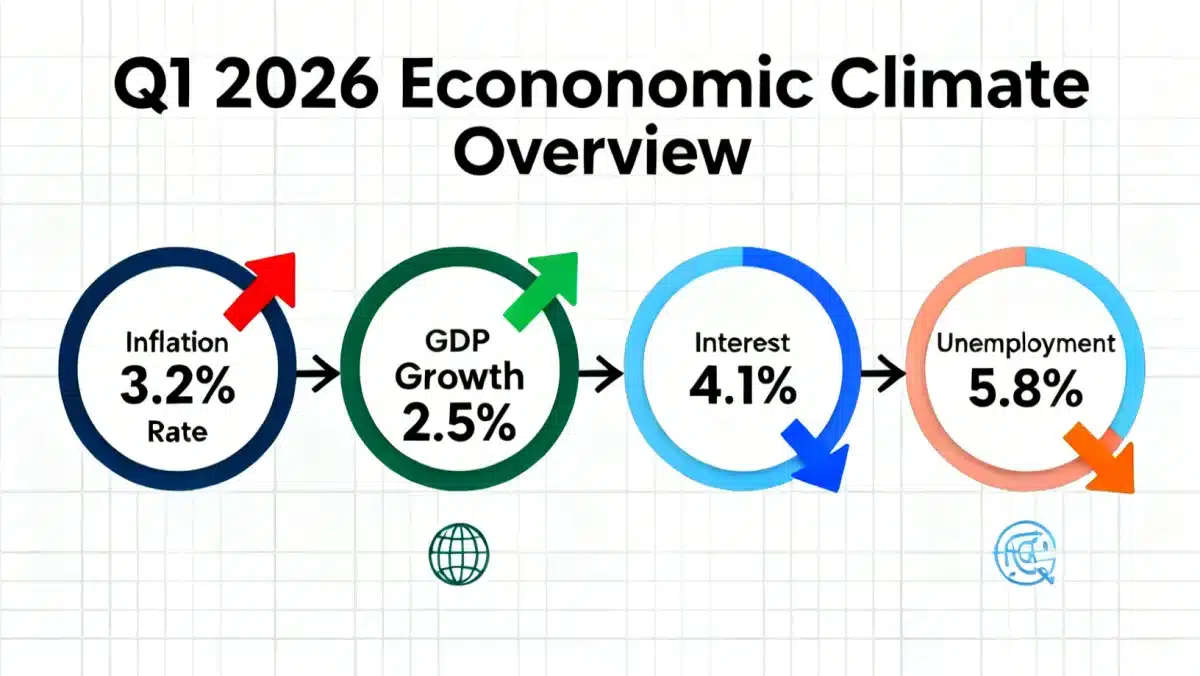
The economic climate in Q1 2026 is characterized by a complex interplay of global and domestic factors. Inflation, while showing signs of moderation, remains a key concern, influencing consumer spending and corporate profitability. Central banks are carefully balancing growth with price stability, leading to a dynamic interest rate environment that impacts borrowing costs and investment returns.
Geopolitical tensions continue to cast a shadow, creating supply chain disruptions and commodity price volatility. However, resilient labor markets in many developed economies, particularly in the United States, provide a foundational strength. This mixed bag of indicators necessitates a cautious yet opportunistic approach to investment.
Inflationary Pressures and Interest Rate Trajectories
The trajectory of inflation remains a dominant theme. While energy and food prices have somewhat stabilized, core inflation, excluding these volatile components, is proving stickier. This persistence is largely attributed to elevated service sector costs and wage growth. Investors must consider how these factors will influence future central bank decisions regarding interest rates.
- Moderate Inflation: Expect continued, albeit slower, moderation in headline inflation numbers.
- Sticky Core Inflation: Services and wage growth will likely keep core inflation elevated for longer.
- Interest Rate Policy: Central banks are likely to maintain a data-dependent stance, with potential for further adjustments based on economic prints.
Global Supply Chains and Geopolitical Impacts
Supply chain resilience has improved compared to previous years, but localized disruptions still pose risks. Geopolitical events, particularly in key manufacturing and resource-rich regions, can quickly escalate, affecting global trade and production. This environment underscores the importance of diversification and investing in companies with robust supply chain management.
Furthermore, the ongoing shift towards nearshoring and friend-shoring strategies by major economies is reshaping global trade flows. This creates new opportunities for domestic industries and regional alliances, while potentially increasing costs in some sectors. Understanding these macro shifts is vital for long-term investment planning.
Emerging Sectors Poised for Growth in 2026
As we analyze the Q1 2026 market outlook, several emerging sectors stand out with significant growth potential, driven by technological advancements, demographic shifts, and evolving consumer preferences. Identifying these areas early can lead to substantial returns for investors willing to look beyond traditional market leaders.
Innovation continues to be the primary engine of economic expansion. Sectors leveraging artificial intelligence, sustainable technologies, and personalized healthcare are not just trends but fundamental shifts in how we live and work. These areas often contain companies that are currently undervalued but possess immense future potential.
Artificial Intelligence and Automation
Artificial intelligence (AI) and automation are no longer nascent technologies; they are deeply integrating into every aspect of business and daily life. From advanced analytics to robotic process automation, companies providing AI solutions or effectively deploying them are gaining a competitive edge. The market for AI-powered services and hardware is expected to expand exponentially.
- AI Infrastructure: Companies developing advanced chips, cloud infrastructure, and data management solutions for AI.
- AI Applications: Software providers offering AI-driven solutions for various industries, such as healthcare, finance, and logistics.
- Robotics and Automation: Manufacturers of industrial robots and automation systems for manufacturing and service sectors.
Sustainable Technologies and Green Energy
The global push towards sustainability continues to accelerate, making green energy and sustainable technologies a cornerstone of future economic growth. Investments in renewable energy sources like solar, wind, and geothermal, along with battery storage and electric vehicle infrastructure, are critical. Companies innovating in waste management, circular economy models, and sustainable agriculture also present compelling opportunities.
Government incentives, corporate ESG (Environmental, Social, and Governance) commitments, and increasing consumer awareness are fueling this sector. Identifying companies with strong intellectual property and scalable solutions in these areas is crucial for long-term value.
Identifying Undervalued Assets: Methodologies and Metrics
Accurately identifying undervalued assets is both an art and a science, requiring a robust methodology and a keen eye for often-overlooked details. In the dynamic Q1 2026 market outlook, investors must move beyond simple price-to-earnings ratios and delve deeper into a company’s intrinsic value, growth prospects, and competitive advantages.
Value investing principles remain highly relevant, but they must be adapted to the rapid pace of technological change and evolving market structures. This involves a comprehensive analysis of financial statements, industry trends, management quality, and potential catalysts for future growth.
Fundamental Analysis for Long-Term Value
Fundamental analysis is the bedrock of identifying undervalued assets. This involves scrutinizing a company’s financial health, management team, competitive landscape, and overall industry. Key financial metrics such as earnings per share (EPS), revenue growth, debt-to-equity ratios, and free cash flow are essential starting points.
However, a truly thorough analysis goes beyond numbers. It requires understanding the company’s business model, its competitive moat, and its ability to innovate and adapt. For instance, a company with a strong brand, unique technology, or significant market share might be undervalued despite seemingly high current valuations if its future growth potential is not fully priced in.
- Earnings and Revenue Growth: Look for consistent, sustainable growth trajectories.
- Balance Sheet Strength: Assess debt levels and liquidity to gauge financial stability.
- Competitive Moat: Identify companies with sustainable advantages over competitors.
- Management Quality: Evaluate the leadership team’s experience and strategic vision.
Discounted Cash Flow (DCF) Analysis and Relative Valuation
Discounted Cash Flow (DCF) analysis is a powerful tool for estimating the intrinsic value of an asset. It involves projecting a company’s future free cash flows and discounting them back to the present day using an appropriate discount rate. This method provides a more accurate picture of a company’s worth than market price alone, especially for growth-oriented companies.
Alongside DCF, relative valuation involves comparing a company’s valuation multiples (e.g., P/E, P/S, EV/EBITDA) to those of its peers or the broader market. If a company’s multiples are significantly lower than its comparable, despite strong fundamentals, it might indicate undervaluation. However, it’s crucial to understand why these discrepancies exist and whether they are justified.
Challenges and Risks in the Q1 2026 Market
While the Q1 2026 market outlook presents numerous opportunities, it is equally important to acknowledge and understand the inherent challenges and risks. The global economic landscape is fraught with uncertainties that can quickly impact investment performance. A proactive approach to risk management is therefore paramount for protecting capital and maximizing returns.
Market volatility, driven by economic data, geopolitical events, and shifts in sentiment, can create significant price swings. Investors must be prepared for these fluctuations and avoid making impulsive decisions based on short-term market movements. A long-term perspective, coupled with a well-diversified portfolio, can help mitigate these risks.
Inflationary Headwinds and Interest Rate Sensitivity
Persistent inflationary pressures can erode the purchasing power of returns, making real (inflation-adjusted) returns difficult to achieve. Companies with high operating leverage or those heavily reliant on imported goods may struggle to pass on increased costs, impacting their profitability. Furthermore, rising interest rates increase the cost of borrowing for businesses, potentially hindering expansion and investment.
- Eroding Returns: Inflation can diminish the real value of investment gains.
- Corporate Profitability: Companies may face margin compression due to higher input costs.
- Debt Servicing Costs: Higher interest rates increase borrowing costs for businesses and consumers.
Geopolitical Instability and Regulatory Changes
Geopolitical tensions, trade disputes, and regional conflicts can introduce significant market instability. These events can disrupt supply chains, impact commodity prices, and lead to sudden shifts in investor confidence. Moreover, evolving regulatory landscapes, particularly in areas like technology, environmental policy, and international trade, can create compliance burdens and affect business models.
Investors need to monitor these developments closely and assess their potential impact on specific sectors and companies. Diversifying investments across different geographies and industries can help cushion the blow from localized geopolitical or regulatory shocks, enhancing portfolio resilience.
Strategic Investment Approaches for 2026
Given the complex Q1 2026 market outlook, adopting strategic investment approaches is crucial for identifying and capitalizing on undervalued assets while managing risks. This involves a blend of traditional value investing principles with a forward-looking perspective on technological and societal shifts.
Diversification across asset classes, sectors, and geographies remains a cornerstone of prudent investing. However, strategic allocation also means being agile enough to shift focus to areas demonstrating clear growth potential or those that are currently out of favor but possess strong underlying fundamentals.
Diversification and Asset Allocation
Effective diversification is more than just owning many different stocks; it involves spreading investments across various asset classes such as equities, fixed income, real estate, and commodities. Within equities, diversifying across different sectors and market capitalizations (large-cap, mid-cap, small-cap) can reduce concentration risk.
Geographic diversification is also increasingly important, given the interconnectedness of global markets. Investing in international markets can provide exposure to different economic cycles and growth drivers, potentially enhancing returns and reducing overall portfolio volatility. Rebalancing the portfolio periodically ensures it remains aligned with your risk tolerance and investment objectives.
- Cross-Asset Diversification: Spread investments across stocks, bonds, real estate, and alternatives.
- Sectoral Diversification: Avoid overconcentration in any single industry.
- Geographic Diversification: Invest in both domestic and international markets.
Long-Term Perspective and Patience
In a market often driven by short-term news cycles and algorithmic trading, maintaining a long-term perspective is a significant advantage. Identifying undervalued assets often requires patience, as it can take time for the market to recognize and reprice these opportunities. Focusing on the intrinsic value of an asset rather than its daily price fluctuations is key.
Emotional investing, often triggered by fear or greed, can lead to poor decisions. By adhering to a well-researched investment thesis and resisting the urge to react to every market dip or surge, investors can avoid common pitfalls and allow their investments to compound over time. This disciplined approach is particularly effective in uncovering the true potential of undervalued assets.
The Role of Technology in Investment Decisions
In the Q1 2026 market outlook, technology plays an increasingly pivotal role in investment decisions, from sophisticated data analytics to AI-driven insights. Investors who leverage these tools can gain a significant edge in identifying undervalued assets, managing risk, and optimizing portfolio performance. The sheer volume of market data available today makes technological assistance almost indispensable.
Beyond just data processing, advanced algorithms can detect patterns, predict market movements, and even identify anomalies that human analysts might miss. This integration of technology transforms investment analysis from a purely qualitative endeavor into a more data-driven and precise science.
AI and Machine Learning for Market Analysis
Artificial intelligence (AI) and machine learning (ML) are revolutionizing how investors analyze markets and identify opportunities. These technologies can process vast amounts of financial data, news articles, social media sentiment, and economic reports at speeds and scales impossible for humans. This allows for the identification of subtle trends and correlations that might indicate an undervalued asset.
Predictive models powered by ML can forecast economic indicators, company earnings, and even geopolitical events with greater accuracy. This enables investors to make more informed decisions, moving beyond historical data to anticipate future market conditions. The ability to quickly adapt to new information is a critical advantage in today’s fast-paced environment.
- Sentiment Analysis: AI can gauge public and investor sentiment from various data sources.
- Predictive Modeling: ML algorithms forecast future market trends and asset performance.
- Anomaly Detection: Algorithms identify unusual patterns that could signal opportunities or risks.
Big Data and Algorithmic Trading
The explosion of big data provides an unprecedented resource for investors. Everything from transaction records to satellite imagery can be analyzed to gain insights into economic activity and corporate performance. Algorithmic trading, which uses complex computer programs to execute trades based on predefined criteria, allows for rapid response to market changes and the exploitation of fleeting opportunities.
While these technologies offer immense potential, it’s crucial to remember that they are tools. Human oversight and critical thinking remain essential. Combining technological insights with qualitative judgment and an understanding of macroeconomic factors provides the most robust investment strategy. The goal is to augment human intelligence, not replace it entirely.
Long-Term Trends Shaping the 2026 Investment Landscape
Beyond the immediate Q1 2026 market outlook, several long-term trends are fundamentally reshaping the investment landscape for the remainder of the decade and beyond. Understanding these macro shifts is essential for identifying enduring undervalued assets and positioning portfolios for sustained growth. These trends often create structural changes in economies and industries, leading to new leaders and laggards.
Demographic changes, climate change, and ongoing globalization (albeit with new forms) are powerful forces that will continue to influence capital flows and investment opportunities. Investors who align their portfolios with these mega-trends are more likely to achieve superior long-term returns.
Demographic Shifts and Their Economic Impact
Global demographic shifts, particularly aging populations in developed economies and rapid urbanization in emerging markets, have profound economic implications. An aging population, for instance, drives demand for healthcare, pharmaceuticals, and retirement services. Conversely, a younger, growing population in other regions fuels consumption, education, and infrastructure development.
Understanding these shifts helps investors identify sectors that will benefit from increased demand or those that will face challenges due to labor shortages or changing consumer bases. Companies that are well-positioned to serve these evolving demographic needs, often with innovative solutions, can represent significant undervalued opportunities.
- Aging Populations: Increased demand for healthcare, biotech, and elder care services.
- Urbanization: Growth in real estate, infrastructure, and consumer goods in developing cities.
- Labor Force Changes: Demand for automation and reskilling programs due to workforce evolution.
Climate Change and the Green Transition
Climate change is perhaps the most significant long-term trend, driving a massive global transition towards a greener, more sustainable economy. This shift creates enormous investment opportunities in renewable energy, energy efficiency, sustainable agriculture, and climate adaptation technologies. Governments, corporations, and consumers are increasingly prioritizing environmental sustainability, leading to significant capital allocation towards these areas.
Companies that are leaders in developing and implementing green technologies, or those that are successfully transitioning their operations to be more sustainable, are likely to see enhanced long-term value. Conversely, businesses heavily reliant on fossil fuels or environmentally unsustainable practices may face increasing regulatory and financial risks.
| Key Point | Brief Description |
|---|---|
| Economic Climate Q1 2026 | Mixed signals with moderating inflation, dynamic interest rates, and geopolitical influences. |
| Emerging Growth Sectors | AI, automation, green energy, and sustainable technologies show high potential. |
| Undervalued Asset Identification | Requires fundamental analysis, DCF, and relative valuation beyond simple metrics. |
| Strategic Investment Approaches | Diversification, long-term perspective, and leveraging technology are key. |
Frequently Asked Questions About Q1 2026 Market Outlook
The main drivers include global inflation trends, central bank interest rate policies, ongoing geopolitical stability, and the continued resilience of labor markets in major economies. These factors collectively shape consumer and corporate behavior.
Sectors poised for strong performance include artificial intelligence and automation, sustainable technologies, green energy solutions, and specialized healthcare innovations, driven by technological advancements and shifting global priorities.
Identifying undervalued assets involves thorough fundamental analysis, utilizing metrics like Discounted Cash Flow (DCF) for intrinsic value, and comparing valuation multiples to peers. Look beyond immediate price and focus on long-term growth potential and competitive advantages.
Key risks include persistent inflationary pressures, potential interest rate hikes, geopolitical instability leading to supply chain disruptions, and evolving regulatory landscapes. Investors should adopt diversified strategies and maintain a long-term outlook to mitigate these challenges.
Technology, especially AI and machine learning, significantly enhances market analysis by processing vast data, predicting trends, and identifying anomalies. Big data and algorithmic trading also provide rapid insights and execution capabilities, augmenting human decision-making.
Conclusion
The Q1 2026 market outlook, while presenting a landscape of both opportunities and challenges, underscores the importance of a well-informed and strategic investment approach. Identifying undervalued assets in this dynamic environment requires a blend of rigorous fundamental analysis, an understanding of emerging sectoral trends, and a keen awareness of macroeconomic shifts. By leveraging technological advancements in data analysis, maintaining a diversified portfolio, and adopting a long-term perspective, investors can navigate the complexities of 2026 to uncover compelling growth opportunities and build resilient wealth. The emphasis remains on diligent research and disciplined execution to capitalize on the market’s evolving narrative.
Autor