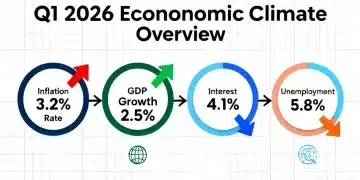
2026 Inflation Outlook: 4 Strategies to Protect Your Savings

The 2026 inflation outlook necessitates strategic financial planning to protect savings, focusing on diversified investments, inflation-indexed assets, debt reduction, and income growth to mitigate potential financial erosion.
As we look towards 2026, understanding the 2026 inflation outlook becomes paramount for anyone serious about safeguarding their financial well-being. The economic landscape is constantly shifting, and being prepared for potential inflationary pressures is not just wise, but essential. This article will guide you through the anticipated economic climate and equip you with practical, actionable strategies to protect your hard-earned savings.
Understanding the 2026 inflation outlook
The economic forecasts for 2026 suggest a complex interplay of global and domestic factors influencing inflation. While some economists predict a moderation of inflationary pressures seen in prior years, others caution that supply chain disruptions, geopolitical events, and evolving consumer demand could keep inflation elevated. Analyzing these potential scenarios is the first step in building a resilient financial plan.
Several key indicators will shape the inflation narrative in the coming years. Energy prices, labor market dynamics, and government fiscal policies are all significant components. A comprehensive understanding of these elements allows individuals to anticipate potential shifts and adapt their financial strategies accordingly. It’s about being proactive rather than reactive in a volatile economic environment.
Key economic indicators to watch
- Consumer Price Index (CPI): This remains the primary measure of inflation, reflecting the average change over time in the prices paid by urban consumers for a market basket of consumer goods and services.
- Producer Price Index (PPI): Tracking the average change over time in the selling prices received by domestic producers for their output, the PPI can be an early indicator of future consumer price changes.
- Wage Growth: Sustained increases in wages can contribute to inflation, particularly if productivity does not keep pace, leading to a wage-price spiral.
- Interest Rates: Central bank policies, especially adjustments to benchmark interest rates, directly influence borrowing costs and economic activity, impacting inflation.
Monitoring these indicators provides valuable insight into the trajectory of inflation. Staying informed through reputable financial news sources and economic reports is crucial for making timely and effective decisions about your savings. The more data you have, the better equipped you will be to navigate the economic currents of 2026.
Strategy 1: Diversify your investment portfolio
One of the most robust defenses against inflation is a well-diversified investment portfolio. Relying too heavily on a single asset class can expose your savings to significant risk when inflation rises. Diversification spreads that risk across various types of investments, each potentially reacting differently to inflationary pressures, thereby cushioning your overall portfolio.
Consider a mix of assets that historically perform well during inflationary periods. This might include commodities, real estate, and certain types of equities. The goal is to build a portfolio that can generate returns that at least keep pace with, if not outpace, the rate of inflation, preserving your purchasing power over time.
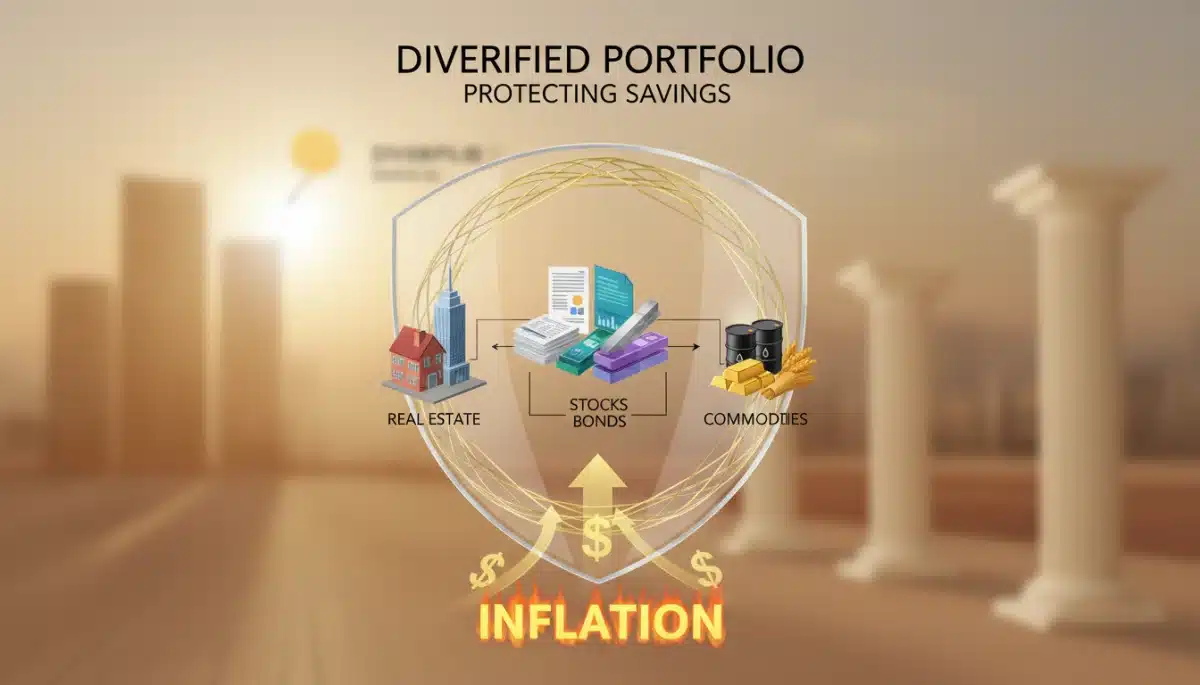
Real estate, for instance, often appreciates in value during inflationary times, and rental income can also increase. Commodities like gold and silver are traditional inflation hedges, though their prices can be volatile. Equities in companies with strong pricing power or those that benefit from rising input costs can also be valuable additions.
Investing in inflation-resistant assets
When diversifying, focus on assets that have a proven track record of performing well or maintaining their value during inflationary periods. These assets often have intrinsic value or can adjust their prices to reflect higher costs.
- Real Estate: Property values and rental income tend to rise with inflation, making real estate an attractive hedge. Consider REITs (Real Estate Investment Trusts) for broader exposure without direct property ownership.
- Commodities: Gold, silver, and other raw materials often see their prices increase as the cost of living goes up. Futures contracts or commodity ETFs can offer exposure.
- Treasury Inflation-Protected Securities (TIPS): These government bonds are specifically designed to protect against inflation. Their principal value adjusts with the Consumer Price Index (CPI), ensuring your investment keeps pace.
- Dividend Stocks: Companies with strong balance sheets and consistent dividend growth can provide a growing income stream that helps combat the erosion of purchasing power.
A balanced approach to diversification, tailored to your risk tolerance and financial goals, is crucial. Regularly review and rebalance your portfolio to ensure it remains aligned with your strategy for protecting your savings against the evolving 2026 inflation outlook.
Strategy 2: Optimize your debt and cash management
Managing debt and cash effectively is another critical strategy for navigating inflationary environments. High inflation erodes the purchasing power of money, making it more expensive to borrow and reducing the real value of cash holdings. Therefore, a proactive approach to both is essential to protect your financial health.
Start by evaluating your existing debt. Variable-rate debts, such as certain credit cards or adjustable-rate mortgages, can become more burdensome as interest rates rise in response to inflation. Prioritizing the reduction or refinancing of these debts can lock in lower rates and provide greater financial stability.
Reducing high-interest debt
High-interest debt is a significant drain on your finances, especially during inflationary periods when the cost of everything else is also increasing. Developing a clear plan to pay down these obligations is paramount.
- Prioritize: Focus on debts with the highest interest rates first. The “debt snowball” or “debt avalanche” methods can be effective strategies.
- Refinance: Explore options to refinance variable-rate loans into fixed-rate alternatives, if market conditions are favorable. This provides predictability in your monthly payments.
- Consolidate: Consider consolidating multiple high-interest debts into a single, lower-interest loan to simplify payments and reduce overall interest paid.
Beyond debt, your cash management strategy also needs attention. While keeping an emergency fund is vital, holding excessive amounts of cash in low-yield accounts can lead to a significant loss of purchasing power due to inflation. Look for ways to keep your cash working for you.
Smart cash management in an inflationary environment
While liquidity is important, ensuring your cash isn’t losing value to inflation is equally crucial. High-yield savings accounts and short-term fixed income options can offer better returns than traditional checking accounts.
- High-Yield Savings Accounts: Seek out online banks or credit unions offering competitive interest rates on savings accounts. Even small increases can make a difference over time.
- Short-Term CDs: Certificates of Deposit (CDs) with shorter maturities can offer slightly higher returns than savings accounts, providing a safe place for funds you won’t need immediately.
- Money Market Accounts: These accounts often offer higher interest rates than traditional savings accounts and may include check-writing privileges, blending liquidity with better returns.
By actively managing both your debt and cash, you can mitigate the negative effects of inflation and ensure your financial resources are utilized as efficiently as possible in the lead-up to and during the 2026 inflation outlook.
Strategy 3: Increase your income streams
In an inflationary environment, the purchasing power of your existing income diminishes. One of the most direct ways to combat this erosion is to actively seek opportunities to increase your income. This can involve career advancement, developing new skills, or exploring additional revenue streams outside of your primary employment. The more diverse and robust your income, the better equipped you will be to absorb rising costs.
Consider investing in your professional development. Acquiring new certifications, pursuing higher education, or mastering in-demand skills can lead to promotions, salary increases, or new job opportunities that offer better compensation. Employers are often willing to pay more for individuals who bring specialized knowledge and increased value to the organization.
Leveraging skills and professional development
Your existing skill set is a valuable asset. Identifying how to enhance it or apply it in new ways can significantly boost your earning potential. Continuous learning is key in a rapidly evolving job market.
- Upskilling: Take courses, workshops, or pursue certifications in areas that complement your current role or open doors to new career paths.
- Networking: Connect with professionals in your industry to uncover new opportunities, learn about market trends, and gain insights into higher-paying roles.
- Negotiation: Be prepared to negotiate your salary during performance reviews or when accepting new positions. Research industry benchmarks to ensure you are compensated fairly.
Beyond your primary job, exploring side hustles or passive income streams can provide an additional buffer against inflation. These supplementary incomes can range from freelance work to investing in dividend-paying assets or creating digital products. The goal is to create multiple channels through which money flows into your household.
Exploring additional revenue streams
Diversifying your income sources provides financial resilience. It reduces reliance on a single employer and offers flexibility during economic shifts.
- Freelancing: Offer your professional skills (writing, design, consulting, coding) on a freelance basis. Platforms like Upwork or Fiverr can connect you with clients.
- Passive Income: Invest in dividend stocks, real estate (through REITs or direct ownership), or create digital products (e-books, online courses) that generate income with minimal ongoing effort.
- Gig Economy: Participate in the gig economy through ride-sharing, food delivery, or task-based services for supplemental income.
By strategically increasing your income, you not only counteract the effects of inflation but also build a stronger financial foundation that can withstand future economic uncertainties, making your savings more robust in the face of the 2026 inflation outlook.
Strategy 4: Adjust your budget and spending habits
Inflation directly impacts your daily expenses, making it crucial to regularly review and adjust your budget and spending habits. What was affordable last year might be a strain on your finances next year. A proactive approach to budgeting helps you identify areas where you can cut back or reallocate funds, ensuring your money stretches further.
Start by tracking your expenses meticulously. Many budgeting apps and tools can automate this process, giving you a clear picture of where your money is going. Once you understand your spending patterns, you can make informed decisions about where to trim non-essential costs without significantly impacting your quality of life.
Re-evaluating essential versus non-essential spending
Distinguishing between needs and wants becomes particularly important during inflationary periods. While some expenses are unavoidable, others offer flexibility for reduction.
- Needs: Housing, utilities, groceries, transportation, and healthcare are typically essential. Look for ways to optimize these costs, such as negotiating insurance rates or finding more energy-efficient solutions.
- Wants: Dining out, entertainment subscriptions, impulse purchases, and luxury items fall into this category. These are areas where you can often make significant cuts without compromising core necessities.
- Subscription Audit: Regularly review all your subscriptions (streaming, apps, gym memberships) and cancel those you no longer use or derive significant value from.
Beyond cutting costs, consider how you can get more value for your money. This might involve changing your shopping habits, seeking out discounts, or making more sustainable choices that reduce long-term expenses. Every small adjustment can contribute to a more inflation-proof budget.
Smart shopping and consumption strategies
Adapting your consumption patterns can significantly mitigate the impact of rising prices on your budget. Small changes in habits can lead to substantial savings over time.
- Bulk Buying: For non-perishable goods, purchasing in larger quantities when on sale can often lead to lower unit costs.
- Meal Planning: Planning meals in advance reduces food waste and impulse grocery purchases, allowing for more strategic shopping.
- DIY and Repair: Instead of immediately replacing items, consider repairing them or taking on DIY projects to save on labor costs and new purchases.
- Energy Efficiency: Invest in energy-efficient appliances or adopt habits that reduce your utility consumption, such as turning off lights and adjusting thermostats.
By diligently adjusting your budget and adopting smarter spending habits, you can effectively manage the rising cost of living and protect your savings from the erosive effects of the 2026 inflation outlook, ensuring your financial plans remain on track.
Long-term financial planning for stability
While the immediate strategies are crucial, a long-term perspective on financial planning is equally vital to ensure stability against future economic shifts. Inflation is not a one-time event; it’s an ongoing economic force that requires continuous monitoring and adaptation. Developing a robust financial plan that considers various economic scenarios will provide peace of mind and greater security.
This includes regularly reviewing your investment portfolio, updating your budget, and assessing your income streams. Life events, market changes, and personal goals all necessitate adjustments to your financial strategy. A static plan in a dynamic economy is a recipe for falling behind.
Regular portfolio review and adjustments
Your investment portfolio should not be a ‘set it and forget it’ endeavor. Market conditions, inflation rates, and your personal financial situation evolve, requiring periodic assessments and rebalancing.
- Annual Review: Schedule at least an annual review of your entire portfolio with a financial advisor. Discuss performance, asset allocation, and any necessary adjustments.
- Rebalancing: As some assets outperform others, your original asset allocation can drift. Rebalancing brings your portfolio back to your desired risk level and diversification strategy.
- Goal Alignment: Ensure your investments are still aligned with your short-term and long-term financial goals, including retirement, education, and major purchases.
Furthermore, consider the role of professional financial advice. A qualified financial planner can offer personalized insights, help you navigate complex investment options, and ensure your strategies are optimized for your unique circumstances and the prevailing economic climate. Their expertise can be invaluable in crafting an inflation-resilient financial future.
The role of professional financial advice
Navigating the complexities of inflation and investment can be daunting. A financial advisor can provide clarity, structure, and expert guidance tailored to your specific needs.
- Personalized Strategies: Advisors can help you create a customized financial plan that accounts for your income, expenses, risk tolerance, and long-term goals.
- Market Insights: They stay abreast of economic trends and market changes, offering informed recommendations on how to adjust your portfolio and strategies.
- Behavioral Coaching: Advisors can help you avoid emotional investment decisions, especially during volatile times, ensuring you stick to your long-term plan.
By integrating these long-term planning elements, you can build a resilient financial framework that not only protects your savings from the 2026 inflation outlook but also positions you for sustained growth and financial freedom in the years to come.
Preparing for economic uncertainties beyond 2026
While our focus has been on the 2026 inflation outlook, it’s crucial to acknowledge that economic uncertainties extend far beyond a single year. A truly robust financial strategy prepares for a range of potential future scenarios, including further inflationary periods, recessions, or unexpected market disruptions. This involves building financial resilience and adaptability into the core of your planning.
One key aspect of this long-term preparation is maintaining a substantial emergency fund. This fund should ideally cover three to six months of living expenses, providing a safety net for job loss, unexpected medical bills, or other unforeseen financial challenges. Access to liquid funds prevents you from having to sell investments at inopportune times or incur high-interest debt.
Building a robust emergency fund
An emergency fund is the cornerstone of financial security. It provides a buffer against life’s unexpected events, preventing minor setbacks from becoming major financial crises.
- Target Amount: Aim for at least 3-6 months of essential living expenses. For greater peace of mind, especially in uncertain times, consider 9-12 months.
- Accessible Account: Keep your emergency fund in a separate, easily accessible account, such as a high-yield savings account, distinct from your regular checking account.
- Regular Contributions: Make regular, automated contributions to your emergency fund until you reach your target amount. Treat it as a non-negotiable expense.
Furthermore, continuously educating yourself about economic principles and global financial trends empowers you to make informed decisions. Understanding how different economic forces interact helps you anticipate potential risks and identify opportunities. Financial literacy is an ongoing journey that pays dividends over a lifetime.
Continuous financial education and adaptation
The financial world is constantly evolving. Staying informed and adaptable is not just beneficial; it’s essential for long-term financial health.
- Read Reputable Sources: Follow financial news from established and respected publications. Understand different economic perspectives.
- Learn About New Investment Vehicles: Stay informed about emerging investment opportunities and technologies, such as advancements in fintech or new asset classes.
- Review and Adjust Annually: Just as with your portfolio, your overall financial plan should be reviewed and potentially adjusted annually to reflect new economic realities and personal circumstances.
By adopting a forward-thinking mindset and actively preparing for various economic uncertainties, you can enhance your financial resilience, protect your savings, and ensure a more stable future, regardless of what economic challenges may arise beyond the immediate 2026 inflation outlook.
| Key Strategy | Brief Description |
|---|---|
| Diversify Investments | Spread investments across various assets like real estate, commodities, and TIPS to hedge against inflation. |
| Optimize Debt & Cash | Reduce high-interest debt and keep cash in high-yield accounts to maintain purchasing power. |
| Increase Income Streams | Seek career advancement, acquire new skills, or explore side hustles to boost overall earnings. |
| Adjust Budget & Spending | Re-evaluate expenses, distinguish needs from wants, and adopt smart shopping habits to stretch your money. |
Frequently asked questions about 2026 inflation and savings
The main concern for the 2026 inflation outlook is the potential erosion of purchasing power. If inflation remains elevated, the value of savings can diminish, making it harder to afford goods and services in the future. Proactive strategies are essential to mitigate this risk and protect financial stability.
Diversified investments protect savings by spreading risk across various asset classes that tend to perform differently during inflationary periods. Assets like real estate, commodities, and inflation-protected securities can appreciate or generate returns that keep pace with rising costs, preserving the real value of your portfolio.
Managing debt is crucial because inflation often leads to higher interest rates, particularly for variable-rate loans. Reducing or refinancing high-interest debt into fixed-rate options can protect you from increased payment burdens and free up cash flow that can be invested or saved more effectively.
Effective ways to increase income include investing in professional development to secure promotions or higher-paying jobs, exploring freelance opportunities, or developing passive income streams like dividend stocks or digital products. Multiple income sources provide a stronger financial buffer against rising costs.
Adjusting your budget helps by identifying and reducing non-essential spending, reallocating funds to more critical areas, and adopting smarter consumption habits. This ensures your money maintains its value and allows you to save or invest more, mitigating the impact of higher prices on your household finances.
Conclusion
The 2026 inflation outlook demands a proactive and multi-faceted approach to financial planning. By understanding the economic landscape, diversifying investments, optimizing debt and cash management, increasing income streams, and adjusting spending habits, individuals can effectively protect their savings and maintain their financial stability. These strategies, coupled with continuous learning and professional advice, form a robust defense against the erosive effects of inflation, ensuring a more secure financial future for years to come.
Autor