U.S. Supply Chain Resilience: Strategies for 2026

Building a robust supply chain resilience in the U.S. by 2026 necessitates a multi-faceted approach, integrating advanced technological solutions, strategic sourcing diversification, and proactive governmental policies to withstand unforeseen global and domestic challenges.
The landscape of global commerce is constantly evolving, presenting both unprecedented opportunities and significant challenges. For the United States, ensuring robust supply chain resilience by 2026 is not merely an economic goal but a national imperative. Recent years have underscored the fragility of interconnected global systems, prompting a critical re-evaluation of how goods move from production to consumption. This article delves into the strategies essential for fortifying U.S. supply chains against future disruptions, ensuring stability and growth.
Understanding the Current State of U.S. Supply Chains
Before charting a course for 2026, it is crucial to understand the current vulnerabilities and strengths within the U.S. supply chain framework. The past few years have exposed critical weaknesses, from over-reliance on single-source suppliers to inadequate infrastructure and a lack of real-time visibility. These issues have led to significant delays, increased costs, and, in some cases, shortages of essential goods.
However, these challenges have also spurred innovation and a renewed focus on domestic production and strategic partnerships. The U.S. has begun to invest in advanced manufacturing technologies and explore nearshoring opportunities, aiming to reduce dependency on distant and potentially unstable regions. The lessons learned from recent disruptions are invaluable in shaping future strategies for enhanced resilience.
Key Vulnerabilities Identified
- Geographic Concentration: A heavy reliance on a few geographic regions for critical components and raw materials.
- Lack of Transparency: Limited visibility into the deeper tiers of supply chains, making it difficult to identify and mitigate risks proactively.
- Infrastructure Gaps: Aging transportation networks and port inefficiencies contributing to bottlenecks and delays.
- Labor Shortages: Persistent deficits in key logistical and manufacturing sectors impacting operational capacity.
Understanding these points allows for targeted interventions, moving beyond reactive measures to a more anticipatory and robust approach. The goal is not just to recover from disruptions but to prevent their most severe impacts.
Leveraging Technology for Enhanced Resilience
Technology stands as a cornerstone in building future-proof supply chains. By 2026, advanced digital solutions will be indispensable for achieving the necessary levels of visibility, efficiency, and adaptability. Implementing these technologies is not an option but a requirement for any enterprise serious about its long-term operational viability.
From artificial intelligence (AI) and machine learning (ML) to blockchain and the Internet of Things (IoT), these tools offer unprecedented capabilities for real-time data analysis, predictive modeling, and automated decision-making. They can transform reactive operations into proactive, intelligent systems capable of anticipating and responding to disruptions with agility.
Digital Transformation Pillars
- AI and Machine Learning: For demand forecasting, inventory optimization, and identifying potential disruptions before they escalate.
- Blockchain Technology: Enhancing transparency and traceability across the entire supply chain, ensuring authenticity and ethical sourcing.
- Internet of Things (IoT): Providing real-time tracking of goods, environmental conditions, and asset utilization, optimizing logistics and preventing losses.
- Cloud Computing: Facilitating scalable and secure data storage and processing, enabling collaborative platforms for all supply chain partners.
Integrating these technologies requires significant investment and a strategic roadmap. However, the long-term benefits in terms of reduced risk, improved efficiency, and enhanced competitiveness far outweigh the initial costs. The U.S. must accelerate its digital adoption to remain at the forefront of global trade.
Diversification and Localization Strategies
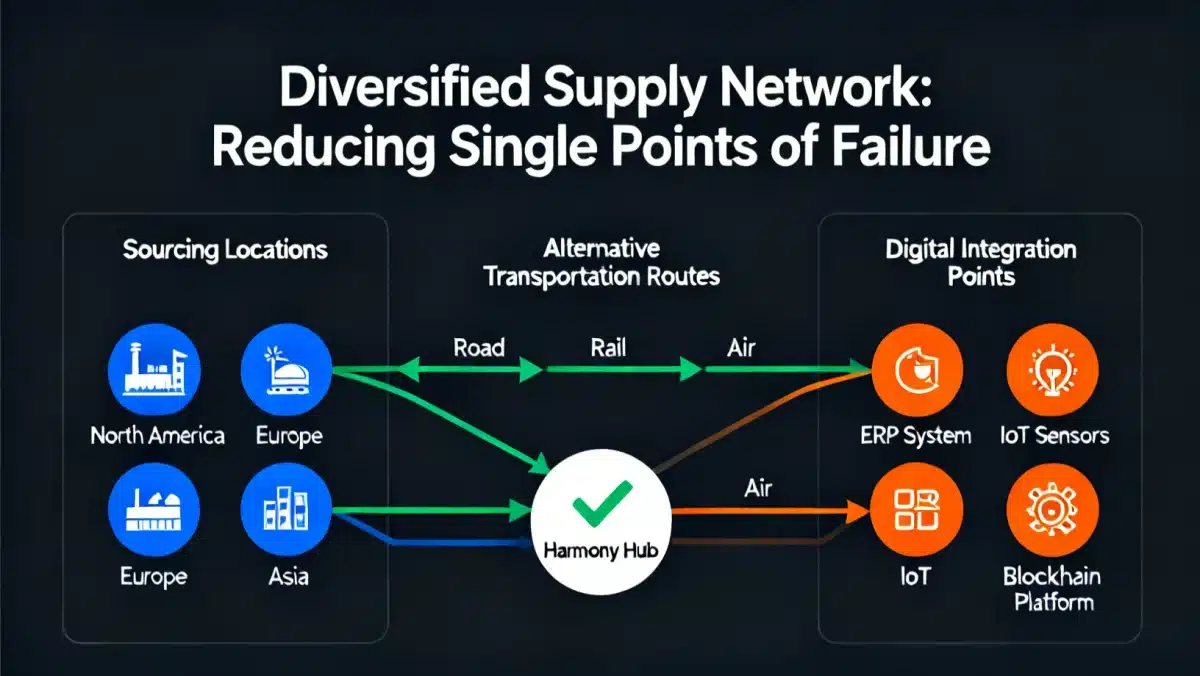
Reducing over-reliance on a few critical suppliers or regions is a fundamental strategy for building supply chain resilience. Diversification involves expanding the network of suppliers, both domestically and internationally, while localization focuses on bringing production closer to the point of consumption. These strategies reduce exposure to single points of failure and enhance flexibility in response to disruptions.
Nearshoring and reshoring initiatives are gaining momentum, driven by a desire for greater control over production processes, reduced transportation costs, and shorter lead times. While not always feasible for all industries, these approaches offer significant advantages for critical sectors such as healthcare, defense, and essential goods manufacturing. The U.S. government plays a crucial role in incentivizing these shifts through policy and financial support.
Strategic Approaches to Diversification
- Multi-Sourcing: Engaging multiple suppliers for critical components, even if it means slightly higher costs for individual items.
- Geographic Spreading: Distributing production and sourcing across various regions to mitigate localized risks such as natural disasters or political instability.
- Nearshoring/Reshoring: Shifting manufacturing and assembly operations to closer regions or back to the U.S. to shorten supply lines and reduce transit risks.
These strategies require careful planning and a thorough understanding of the trade-offs involved. While potentially increasing initial costs, they significantly reduce the risk of catastrophic disruptions, safeguarding economic stability and national security. The key is to find an optimal balance between cost-efficiency and resilience.
Investing in Infrastructure and Workforce Development
A resilient supply chain depends heavily on robust physical and human infrastructure. By 2026, significant investments in modernizing ports, upgrading transportation networks, and developing a skilled workforce will be paramount. Outdated infrastructure creates persistent bottlenecks, while a lack of skilled labor can cripple operational efficiency.
The U.S. needs to prioritize projects that enhance multimodal transportation capabilities, improve port efficiency, and leverage automation in logistics. Simultaneously, addressing the skills gap through education, training programs, and incentives for careers in logistics and manufacturing is vital. A strong workforce is as critical as advanced technology in maintaining smooth supply chain operations.
Public-private partnerships can play a significant role in funding and executing these large-scale infrastructure projects. Collaborative efforts ensure that investments are strategically aligned with national economic and security goals, maximizing their impact on overall supply chain resilience.
Key Investment Areas
- Port Modernization: Upgrading cargo handling systems, expanding capacity, and integrating digital technologies to reduce turnaround times.
- Transportation Networks: Investing in roads, railways, and intermodal facilities to improve the speed and reliability of freight movement.
- Automation in Logistics: Deploying robotics and automated systems in warehouses and distribution centers to enhance efficiency and reduce labor dependency.
These investments lay the groundwork for a more efficient and responsive supply chain, capable of handling increased volumes and adapting to changing demands. Without a strong foundational infrastructure, even the most advanced digital solutions will struggle to deliver their full potential.
Policy and Regulatory Frameworks for 2026
Government policies and regulatory frameworks play a pivotal role in shaping the environment for supply chain resilience. By 2026, the U.S. needs a cohesive and forward-looking policy agenda that incentivizes resilient practices, supports innovation, and harmonizes international trade relations. These policies should aim to reduce bureaucratic hurdles, provide financial incentives for strategic investments, and foster a competitive yet secure trading ecosystem.
International cooperation is also essential. Collaborative efforts with allies to diversify sourcing, share intelligence on potential disruptions, and standardize trade practices can create a more stable global supply network. The U.S. must lead these efforts, advocating for policies that promote transparency, fair competition, and mutual support among trading partners.
Furthermore, policies addressing cybersecurity risks within supply chains are increasingly important. As supply chains become more digitized, they also become more vulnerable to cyberattacks. Robust regulatory frameworks and industry best practices are needed to protect critical data and operational systems from malicious actors.
Building Collaborative Ecosystems and Risk Management
No single entity can achieve full supply chain resilience in isolation. Building robust collaborative ecosystems among businesses, government agencies, and research institutions is essential. By 2026, these ecosystems should facilitate information sharing, joint planning, and coordinated responses to disruptions. Trust and transparency among partners are foundational to effective collaboration.
Effective risk management involves not only identifying potential threats but also developing contingency plans and building flexibility into operations. This includes creating buffer stocks for critical items, establishing alternative transportation routes, and cross-training employees to ensure operational continuity during crises. A proactive and iterative approach to risk assessment is key.
Elements of a Collaborative Ecosystem
- Information Sharing Platforms: Secure digital platforms for partners to share real-time data on inventory, demand, and potential disruptions.
- Joint Planning Initiatives: Collaborative workshops and exercises to develop shared contingency plans and response protocols.
- Research and Development Partnerships: Collaborations between industry and academia to innovate new technologies and best practices for resilience.
These collaborative efforts transform individual vulnerabilities into collective strengths, creating a more interconnected and mutually supportive supply chain network. The synergistic effect of these partnerships far exceeds what any single organization could achieve alone.
The Path Forward: Sustaining Resilience Beyond 2026
Achieving supply chain resilience by 2026 is an ongoing journey, not a destination. The strategies outlined above must be continuously reviewed, adapted, and improved as new challenges and opportunities emerge. The global landscape is dynamic, and supply chains must evolve in tandem to remain effective and secure. Sustaining resilience requires a culture of continuous improvement, innovation, and strategic foresight.
This includes regular stress testing of supply chain networks, investing in continuous workforce training, and staying abreast of technological advancements. Furthermore, fostering a mindset of adaptability and proactive risk management throughout organizations will be crucial. The goal is to create supply chains that are not only resistant to shocks but also capable of transforming and thriving in the face of change.
Ultimately, the success of these strategies will depend on sustained commitment from both the public and private sectors. By working together, the U.S. can build a supply chain network that is not only resilient but also a competitive advantage in the global economy, ensuring prosperity and security for years to come.
| Key Strategy | Brief Description |
|---|---|
| Technological Integration | Utilizing AI, IoT, and blockchain for improved visibility, forecasting, and automated responses to disruptions. |
| Diversification & Localization | Expanding supplier networks and bringing production closer to home to mitigate single-point failure risks. |
| Infrastructure Investment | Modernizing ports, transportation, and logistics automation to enhance efficiency and capacity. |
| Policy & Collaboration | Developing supportive government policies and fostering public-private partnerships for coordinated risk management. |
Frequently Asked Questions About Supply Chain Resilience
Supply chain resilience is critical to protect the U.S. economy from global disruptions, ensuring access to essential goods, maintaining economic stability, and safeguarding national security. Proactive strategies by 2026 aim to prevent severe impacts from future crises.
Technology, including AI, IoT, and blockchain, enhances resilience by providing real-time visibility, predictive analytics for demand and disruptions, and automated decision-making. This allows for quicker, more informed responses to unforeseen challenges, optimizing flow.
Diversification reduces reliance on single suppliers or geographic regions, minimizing the impact of localized disruptions. By having multiple sources and production locations, businesses can pivot quickly when one part of the chain is compromised, ensuring continuity.
Key challenges include high initial investment costs for new technologies and infrastructure, overcoming resistance to change, managing complex global networks, and addressing labor shortages. Balancing cost-efficiency with robustness remains a persistent hurdle.
Government policies will support resilience through incentives for domestic production, investments in critical infrastructure, fostering international cooperation, and developing regulatory frameworks that promote transparency and cybersecurity. These policies create a conducive environment for resilient practices.
Conclusion
The journey towards a truly resilient U.S. supply chain by 2026 is multifaceted, demanding sustained effort and strategic collaboration across various sectors. By embracing technological innovation, diversifying sourcing, investing in robust infrastructure, and implementing supportive policy frameworks, the nation can build a supply chain network capable of withstanding future disruptions. This proactive approach not only mitigates risks but also positions the U.S. for long-term economic stability and global competitiveness. The lessons of the past few years have been clear; the path forward requires collective action and an unwavering commitment to adaptability and foresight.
Autor