Decoding US Job Descriptions 2026: Key Keywords Analyzed

The evolving US job market in 2026 necessitates understanding specific keywords within job descriptions that signify critical skills and employer expectations.
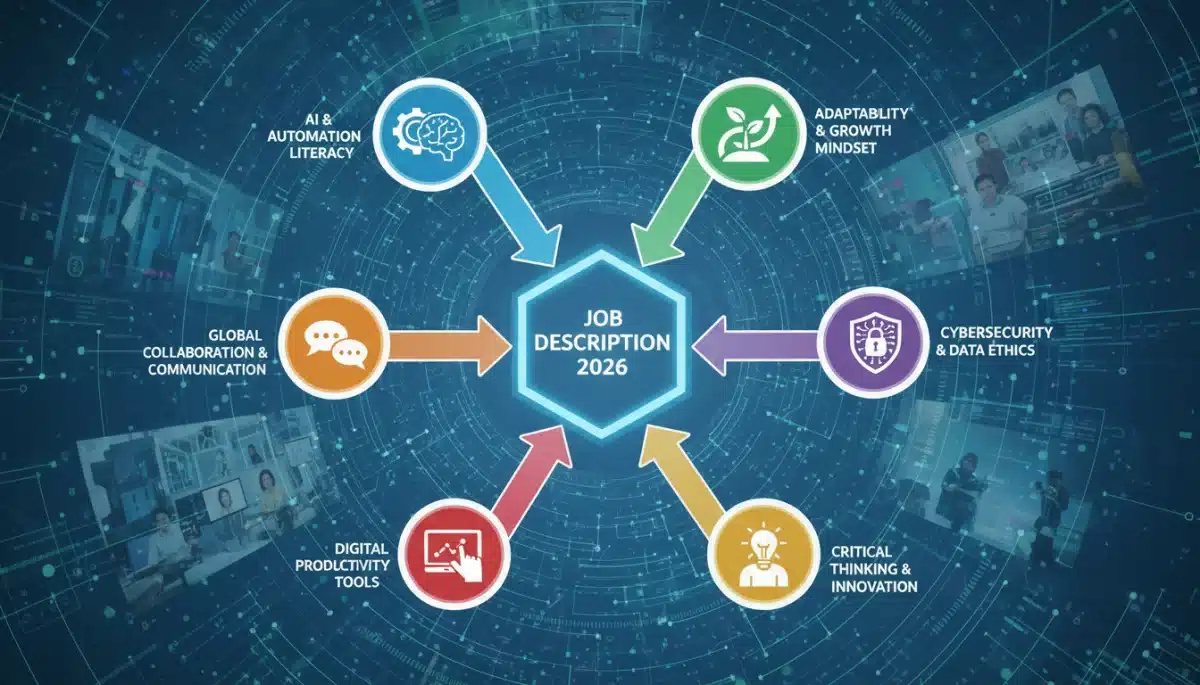
Are you ready to navigate the future of work? Understanding the nuances of current job postings is crucial, and in 2026, certain terms have taken center stage. This article delves into US job descriptions 2026, highlighting six pivotal keywords that are reshaping hiring landscapes across the nation.
The Rise of ‘AI Proficiency’: More Than Just a Buzzword
In 2026, ‘AI Proficiency’ has transitioned from a niche skill to a fundamental expectation across a multitude of industries. Employers are no longer just seeking experts in artificial intelligence development; they’re looking for individuals who can effectively leverage AI tools and platforms to enhance productivity and innovation within their roles.
This keyword signifies a broader understanding of AI’s capabilities and limitations, its ethical implications, and how it can be integrated into daily workflows. It’s about being AI-literate, not necessarily an AI developer.
Understanding AI Integration in Daily Tasks
The demand for AI proficiency extends beyond technical roles. From marketing analysts using AI for predictive modeling to customer service representatives deploying AI-powered chatbots, the ability to work alongside and with AI systems is paramount. This integration requires a new type of adaptability.
- Prompt Engineering: Crafting effective queries for AI models to yield desired results.
- Data Interpretation: Analyzing AI-generated insights to make informed business decisions.
- Ethical AI Use: Adhering to responsible AI principles and data privacy regulations.
- Automation Optimization: Identifying opportunities to automate routine tasks using AI tools.
Why Employers Prioritize AI Acumen
Companies are realizing that a workforce capable of harnessing AI can dramatically improve efficiency, reduce operational costs, and accelerate innovation cycles. This isn’t just about adopting new software; it’s about fundamentally changing how work gets done. Job descriptions increasingly reflect this strategic shift, making ‘AI Proficiency’ a non-negotiable skill for many positions.
The emphasis is on practical application and a forward-thinking mindset. Candidates who can demonstrate tangible examples of using AI to solve problems or improve processes will stand out in a competitive market.
In conclusion, ‘AI Proficiency’ in 2026 is a cornerstone skill, indicating a candidate’s readiness to thrive in an increasingly automated and data-driven professional landscape. It underscores the shift towards a symbiotic relationship between human talent and artificial intelligence.
‘Hybrid Work Agility’: Adapting to Evolving Workplace Models
The concept of ‘Hybrid Work Agility’ has cemented its place in 2026 job descriptions, reflecting the widespread adoption of flexible work models. This keyword goes beyond simply being able to work remotely or in an office; it encapsulates an individual’s capacity to seamlessly transition between different work environments while maintaining productivity, collaboration, and engagement.
Employers are seeking individuals who are not only comfortable with this fluidity but can actively contribute to a cohesive team dynamic, regardless of physical location. It’s about resilience, self-management, and effective communication in distributed settings.
Key Components of Hybrid Work Agility
This agility involves a blend of technical and soft skills. On the technical front, it means being adept with collaboration tools, virtual meeting platforms, and cloud-based project management systems. Behaviorally, it demands strong time management, proactive communication, and the ability to foster connections in a virtual space.
- Self-Discipline & Time Management: Effectively managing schedules and priorities across different work settings.
- Digital Collaboration Tools: Proficiency in platforms like virtual whiteboards, project trackers, and communication apps.
- Proactive Communication: Ensuring clear and consistent information exchange with colleagues and stakeholders.
- Adaptability & Resilience: Adjusting to changing work environments and overcoming challenges inherent in hybrid models.
The Strategic Value for Organizations
Companies recognize that hybrid models offer significant advantages, including access to a wider talent pool, improved employee satisfaction, and enhanced business continuity. However, these benefits are only fully realized with a workforce that possesses ‘Hybrid Work Agility’. This keyword signals a candidate’s readiness to contribute positively to this dynamic structure, minimizing friction and maximizing output.
It’s about demonstrating that one can be an effective team member whether working from a home office, a co-working space, or the traditional corporate headquarters.
Ultimately, ‘Hybrid Work Agility’ is a critical indicator of a candidate’s ability to thrive in the modern, flexible workplace of 2026, ensuring sustained productivity and strong team cohesion across diverse working arrangements.
‘Sustainable Practices Integration’: A Core Business Imperative
By 2026, ‘Sustainable Practices Integration’ has become a non-negotiable keyword in numerous US job descriptions, extending far beyond environmental roles. This phrase indicates an employer’s commitment to environmental, social, and governance (ESG) principles and their expectation that all employees contribute to these goals. It’s about understanding how one’s role impacts sustainability and actively seeking ways to implement eco-friendly and socially responsible actions.
This isn’t just about corporate social responsibility; it’s about embedding sustainable thinking into every facet of business operations, from supply chain management to product development and customer engagement.
Applying Sustainable Thinking in Various Roles
Whether it’s a marketing manager promoting eco-friendly products, an operations specialist optimizing energy consumption, or a product designer selecting sustainable materials, the ability to integrate sustainable practices is highly valued. It requires a mindset that balances economic goals with environmental and social impact.
The Broader Impact of ESG
The push for sustainability is driven by consumer demand, regulatory pressures, and a growing awareness of global challenges. Companies are increasingly scrutinized for their ESG performance, making it a strategic priority. Job descriptions featuring ‘Sustainable Practices Integration’ are seeking individuals who can help meet these evolving expectations, contributing to a company’s long-term viability and reputation.
- Resource Efficiency: Identifying ways to reduce waste and optimize energy use.
- Ethical Sourcing: Understanding and advocating for responsible supply chain practices.
- Circular Economy Principles: Contributing to product designs that minimize environmental impact.
- Social Responsibility: Engaging in initiatives that benefit communities and promote fair labor practices.
In essence, ‘Sustainable Practices Integration’ reflects a fundamental shift in corporate values, requiring employees to be conscientious contributors to a more responsible and resilient future. It’s about making impactful choices that benefit both the business and the planet.
‘Data Literacy & Analytics’: Beyond Basic Spreadsheet Skills
In 2026, ‘Data Literacy & Analytics’ stands out as a critical keyword, signifying a profound shift from basic data handling to sophisticated data interpretation and application. Employers are seeking candidates who can not only collect and organize data but also understand its context, draw meaningful insights, and use those insights to inform strategic decisions. This skill set is no longer confined to data scientists; it’s a universal requirement.
This keyword implies the ability to navigate complex datasets, identify trends, and communicate findings effectively to non-technical stakeholders, driving data-informed actions across all departments.
The Evolution of Data Skills
Gone are the days when simple spreadsheet proficiency sufficed. Today’s roles demand an understanding of data visualization tools, basic statistical analysis, and the capacity to identify potential biases in data. It’s about transforming raw numbers into actionable intelligence.
- Critical Data Evaluation: Assessing the reliability and relevance of data sources.
- Insight Generation: Extracting meaningful patterns and conclusions from complex data.
- Data Visualization: Presenting data clearly and compellingly using various tools.
- Decision Support: Using data to back up recommendations and strategic choices.
Impact on Business Strategy
Organizations in 2026 are increasingly reliant on data to gain competitive advantages, optimize operations, and personalize customer experiences. A workforce fluent in ‘Data Literacy & Analytics’ can drive these initiatives, leading to more efficient processes, better product development, and stronger market positioning. This keyword signals a candidate’s potential to contribute directly to these strategic objectives.
It’s about empowering every employee to be a data-driven thinker, contributing to a culture of continuous improvement and informed decision-making.
In conclusion, ‘Data Literacy & Analytics’ in 2026 represents the foundational skill needed to navigate and capitalize on the vast amounts of information available, enabling smarter decisions and accelerating business growth.
‘Cybersecurity Awareness’: The First Line of Digital Defense
‘Cybersecurity Awareness’ is a keyword that has escalated in importance in 2026 job descriptions, moving beyond IT departments to become a universal expectation for all employees. This signifies that every individual within an organization is considered a crucial component in the overall defense against cyber threats. It’s about understanding common attack vectors, recognizing suspicious activities, and adhering to best practices to protect sensitive information and systems.
With the increasing sophistication of cyberattacks, employers are proactively seeking candidates who possess a foundational understanding of digital security, minimizing vulnerabilities from within the organization.
Every Employee as a Security Asset
This awareness involves more than just knowing what a strong password is. It includes understanding phishing attempts, recognizing social engineering tactics, reporting potential breaches, and ensuring compliance with data protection policies. Each employee’s vigilance contributes significantly to the company’s overall security posture.
Protecting Organizational Integrity
Data breaches can lead to severe financial losses, reputational damage, and legal repercussions. By emphasizing ‘Cybersecurity Awareness’ in job descriptions, companies are building a culture of security where every team member actively participates in protecting corporate assets and customer data. This keyword indicates a candidate’s responsibility and commitment to safeguarding digital integrity.
- Phishing Recognition: Identifying and avoiding deceptive emails or messages.
- Strong Password Protocols: Implementing and managing robust authentication methods.
- Data Protection Compliance: Adhering to regulations like GDPR or CCPA in data handling.
- Incident Reporting: Knowing how and when to report suspicious activities or potential breaches.
Ultimately, ‘Cybersecurity Awareness’ in 2026 is an essential skill for all roles, reflecting the critical need for a vigilant and informed workforce to combat the evolving landscape of digital threats.
‘Emotional Intelligence (EQ)’: The Human Edge in an AI World
As technology advances, ‘Emotional Intelligence (EQ)‘ has become an increasingly vital keyword in 2026 job descriptions. While AI handles repetitive and analytical tasks, the demand for uniquely human skills like empathy, self-awareness, and relationship management has intensified. Employers are actively seeking candidates who can navigate complex interpersonal dynamics, foster positive work environments, and lead with compassion.
This keyword highlights the recognition that even in a highly automated world, human connection and effective collaboration remain indispensable for innovation and organizational success.
EQ in a Collaborative Environment
Emotional intelligence is crucial for effective teamwork, conflict resolution, and leadership. Individuals with high EQ can better understand their colleagues’ perspectives, manage their own emotions under pressure, and build stronger, more productive relationships. These soft skills differentiate human talent in an era of technological dominance.
- Self-Awareness: Understanding one’s own emotions, strengths, and weaknesses.
- Empathy: Recognizing and understanding the feelings of others.
- Social Skills: Building rapport, influencing, and managing conflicts effectively.
- Motivation: Driving oneself and inspiring others towards common goals.
Why EQ is More Critical Than Ever
In 2026, where hybrid teams and diverse workforces are the norm, EQ ensures that communication remains clear, conflicts are resolved constructively, and team morale stays high. This keyword signals a candidate’s ability to contribute to a healthy, inclusive, and high-performing culture, which is paramount for attracting and retaining top talent.
It’s about bringing a human touch to interactions, fostering trust, and creating an environment where everyone feels valued and understood.
To summarize, ‘Emotional Intelligence‘ in 2026 is recognized as a cornerstone of effective leadership and team collaboration, providing the essential human element that technology cannot replicate, and driving success in an increasingly interconnected and empathetic workplace.
‘Blockchain Familiarity’: Understanding Decentralized Futures
In 2026, ‘Blockchain Familiarity‘ is emerging as a significant keyword, particularly in industries undergoing digital transformation. While not every role requires being a blockchain developer, a foundational understanding of distributed ledger technology (DLT) is increasingly valued. This keyword indicates an employer’s need for individuals who grasp the potential of blockchain beyond cryptocurrencies, recognizing its applications in supply chain transparency, secure data management, digital identity, and smart contracts.
It signifies a forward-thinking mindset and an ability to adapt to new, decentralized paradigms that are reshaping various sectors, from finance to logistics and healthcare.
Applications Beyond Finance
The relevance of blockchain extends far beyond financial transactions. Professionals in areas like supply chain management need to understand how blockchain can offer immutable records of goods. Marketers might delve into non-fungible tokens (NFTs) and digital ownership. Legal professionals must grapple with smart contracts and digital legal frameworks. This broad applicability makes ‘Blockchain Familiarity’ a versatile and valuable asset.
The Strategic Advantage of Blockchain Understanding
Companies are investing heavily in blockchain solutions to enhance security, efficiency, and trust in their operations. A workforce with ‘Blockchain Familiarity’ can better identify opportunities for innovation, contribute to the adoption of new technologies, and navigate the regulatory landscape surrounding DLT. This keyword points to a candidate’s capacity to engage with cutting-edge technologies and contribute to future-proof business strategies.
- Decentralized Concepts: Understanding the principles of peer-to-peer networks and consensus mechanisms.
- Smart Contracts: Grasping the basics of self-executing agreements on the blockchain.
- Supply Chain Transparency: Recognizing how DLT can track goods and verify authenticity.
- Digital Identity: Understanding the role of blockchain in secure identity management.
In conclusion, ‘Blockchain Familiarity‘ in 2026 represents an awareness of a transformative technology that is poised to redefine trust and transactions across industries, making it a valuable asset for any professional looking to stay ahead in the evolving digital economy.
| Keyword | Brief Significance in 2026 |
|---|---|
| AI Proficiency | Leveraging AI tools for productivity and innovation across all roles. |
| Hybrid Work Agility | Seamless adaptation to flexible work environments and distributed teams. |
| Sustainable Practices Integration | Embedding ESG principles into daily tasks and business operations. |
| Data Literacy & Analytics | Interpreting data for strategic decision-making, beyond basic handling. |
Frequently Asked Questions About 2026 Job Market Trends
AI proficiency is vital because it signifies an individual’s ability to leverage AI tools for enhanced productivity and innovation. Employers seek candidates who can effectively integrate AI into workflows, not just develop AI, driving efficiency and accelerating strategic goals across various roles.
For job seekers, ‘Hybrid Work Agility’ means demonstrating the capacity to seamlessly work across remote and in-office settings. It involves strong self-management, proactive digital communication, and the ability to maintain engagement and productivity within diverse team structures, adapting to flexible work models.
‘Sustainable Practices Integration’ impacts all roles by requiring employees to consider environmental, social, and governance (ESG) principles in their daily tasks. It’s about making eco-conscious choices, optimizing resource use, and contributing to a company’s overall ethical and responsible business practices, regardless of specific job function.
No, ‘Data Literacy & Analytics’ is increasingly relevant for all positions. It involves the ability to interpret data, identify patterns, and use insights for informed decision-making. While technical roles delve deeper, all professionals are expected to understand data’s context and implications to drive smarter actions.
Emotional Intelligence is gaining importance as AI handles more analytical tasks, emphasizing uniquely human skills. Employers value empathy, self-awareness, and relationship management to foster positive team dynamics, resolve conflicts, and drive innovation through effective human interaction, which AI cannot replicate.
Conclusion
The US job market in 2026 is a dynamic landscape, shaped by rapid technological advancements and evolving societal values. The six keywords explored—’AI Proficiency,’ ‘Hybrid Work Agility,’ ‘Sustainable Practices Integration,’ ‘Data Literacy & Analytics,’ ‘Cybersecurity Awareness,’ and ‘Emotional Intelligence‘—are not mere trends but fundamental shifts in employer expectations. For both job seekers aiming to remain competitive and employers seeking top talent, understanding and embodying these keywords will be paramount to success in the coming years. By focusing on these critical areas, individuals and organizations can confidently navigate the future of work and thrive in an increasingly interconnected and intelligent professional world.
Autor