2026 School Accountability: National Performance Grading Explained

Understanding the 2026 school accountability measures is crucial for educators, parents, and policymakers as national performance grading shifts.
As the educational landscape evolves, understanding the nuances of how schools are evaluated becomes paramount. The upcoming 2026 school accountability measures are set to redefine how performance will be graded nationally, impacting every student, teacher, and institution across the United States. This shift demands a closer look at the new frameworks, metrics, and implications for future educational strategies.
The Evolution of School Accountability
School accountability has undergone significant transformations over the decades, driven by a continuous effort to improve educational outcomes and ensure equitable opportunities for all students. From No Child Left Behind to the Every Student Succeeds Act (ESSA), each legislative iteration has aimed to refine how schools are held responsible for student progress and achievement. The 2026 measures represent the next significant step in this ongoing evolution, building upon past lessons while introducing new approaches tailored to the demands of a rapidly changing world.
Historically, accountability frameworks often focused heavily on standardized test scores as the primary indicator of school success. While testing remains a component, there’s a growing recognition of the need for a more holistic view that encompasses a wider range of factors contributing to a student’s educational journey and a school’s overall effectiveness. This broader perspective acknowledges that true success extends beyond mere academic proficiency to include social-emotional development, readiness for college and careers, and the ability to thrive in a diverse society.
Shifting Paradigms in Evaluation
- Beyond Test Scores: Moving towards a multi-indicator system that includes student growth, attendance, and school climate.
- Equity Focus: Increased emphasis on closing achievement gaps among different student subgroups.
- Innovation and Flexibility: Allowing states more autonomy in developing accountability systems that meet their unique needs while adhering to federal guidelines.
The lessons learned from previous accountability eras have highlighted both successes and unintended consequences. For instance, an overreliance on single metrics can incentivize narrow instructional practices, potentially neglecting broader educational goals. The 2026 framework seeks to mitigate these issues by promoting a more balanced and comprehensive assessment of school performance, encouraging innovation while maintaining a clear focus on student success. This balanced approach aims to foster environments where schools can adapt and excel without being unduly constrained by rigid evaluation criteria.
In conclusion, the evolution of school accountability reflects a dynamic process of learning and adaptation. The 2026 measures are poised to usher in a new era, characterized by a more nuanced and comprehensive approach to evaluating school performance, ultimately aiming to serve students better and prepare them for future challenges.
Key Pillars of the 2026 Framework
The forthcoming 2026 school accountability framework is built upon several key pillars designed to provide a more comprehensive and equitable assessment of school performance. These pillars move beyond traditional metrics, aiming to capture the full spectrum of a school’s impact on student learning and development. Understanding these foundational elements is crucial for all stakeholders to effectively navigate the new accountability landscape.
One of the central tenets of the 2026 framework is its emphasis on student growth over static achievement scores. While proficiency remains important, the ability of a school to help all students, regardless of their starting point, make significant academic progress is now a primary indicator. This shift recognizes the diverse needs of student populations and rewards schools that effectively support every learner’s journey. It encourages educators to focus on individual student trajectories rather than just end-of-year snapshots.
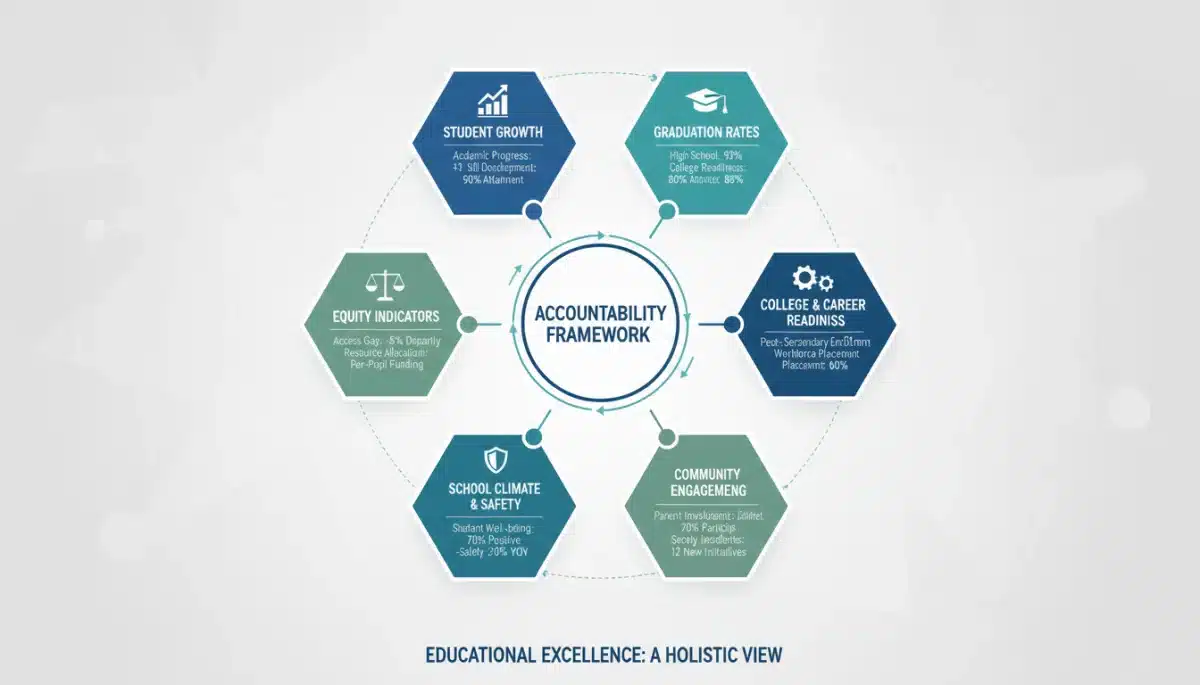
Another critical pillar is the broadened definition of success. The 2026 measures will likely incorporate indicators related to college and career readiness, such as advanced coursework completion, industry certifications, and post-secondary enrollment rates. This expansion acknowledges that schools play a vital role in preparing students not just for higher education but also for successful entry into the workforce and active participation in society.
Measuring What Matters: New Indicators
The framework introduces a suite of new indicators to ensure a holistic evaluation:
- Student Growth Percentiles: Quantifying individual student academic progress over time.
- Chronic Absenteeism Rates: Recognizing the impact of consistent attendance on learning outcomes.
- School Climate and Safety: Assessing the learning environment’s quality and security.
- Post-Secondary Readiness: Measuring indicators like FAFSA completion, dual enrollment, and career pathway engagement.
Furthermore, the 2026 framework places a strong emphasis on equity. It mandates that accountability systems disaggregate data by student subgroups (e.g., race, socioeconomic status, students with disabilities, English learners) to identify and address achievement gaps. This ensures that all students receive the support they need to succeed and that schools are held accountable for equitable outcomes across their entire student population. This focus on equity aims to shine a light on disparities and drive targeted interventions.
In essence, the key pillars of the 2026 framework represent a thoughtful progression towards a more comprehensive, growth-oriented, and equitable system of school accountability, designed to better reflect the diverse ways schools contribute to student success.
Impact on States and Local Districts
The implementation of the 2026 school accountability measures will undoubtedly have a profound impact on states and local districts across the United States. While the federal framework provides overarching guidelines, states retain significant flexibility in designing and implementing their specific accountability systems. This balance aims to ensure both national consistency in educational goals and responsiveness to local contexts and needs.
States will be tasked with translating the federal pillars into actionable policies and metrics that align with their unique educational priorities and existing data infrastructure. This will involve extensive stakeholder engagement, including educators, parents, community leaders, and policymakers, to ensure that the new systems are well-understood and supported. The process of adapting to the 2026 framework will require careful planning and resource allocation at the state level.
Local districts, in turn, will experience the direct effects of these state-level changes. They will need to adjust their instructional practices, data collection methods, and resource allocation to align with the new accountability requirements. This may involve investing in professional development for teachers to support new assessment strategies, enhancing data analytics capabilities to track student growth more effectively, and developing targeted interventions for struggling schools or student subgroups.
Adaptation and Implementation Challenges
- Data System Upgrades: Ensuring robust data infrastructure to collect and analyze new indicators.
- Resource Allocation: Directing funding towards areas most impacted by new accountability metrics.
- Professional Development: Training educators on new teaching methodologies aligned with broader success definitions.
- Community Engagement: Communicating changes to parents and the broader community to foster understanding and support.
A significant challenge for both states and districts will be ensuring that the new accountability systems are perceived as fair and motivating, rather than punitive. The goal is to create systems that encourage continuous improvement and innovation, celebrating successes while providing clear pathways for addressing areas of concern. This requires a shift in mindset from compliance-driven accountability to one focused on genuine improvement and student well-being.
Furthermore, the 2026 measures will likely influence how states and districts prioritize funding and support for schools. Those identified as needing improvement under the new framework may receive increased resources and targeted assistance, while high-performing schools might be recognized for their innovative practices. This differentiated support is crucial for fostering a system that is both equitable and effective in driving widespread educational excellence.
In summary, the 2026 accountability measures will necessitate significant adaptation at both state and local levels, requiring thoughtful planning, strategic resource allocation, and broad stakeholder collaboration to ensure successful implementation and improved educational outcomes.
Performance Grading: What’s New?
The methodology for performance grading under the 2026 school accountability measures introduces several novel approaches, moving beyond simplistic letter grades or pass/fail designations. The aim is to provide a more nuanced and actionable understanding of school performance, recognizing the complexities of educational environments and the diverse factors contributing to student success. This evolution in grading seeks to inform and empower, rather than merely label.
One significant innovation is the potential adoption of a multi-dimensional dashboard approach to grading. Instead of a single score, schools might receive ratings across various indicators, such as academic achievement, student growth, college and career readiness, and school climate. This allows for a more granular view of strengths and areas for improvement, providing stakeholders with a comprehensive picture of a school’s overall effectiveness. Such a dashboard would offer transparency and facilitate targeted interventions.
Another key change relates to how progress is weighted. The new framework is expected to give greater weight to year-over-year student growth, acknowledging that schools serving high-need populations may start with lower baseline achievement but demonstrate significant progress. This shift aims to reward schools for the value they add to student learning, rather than solely focusing on absolute proficiency levels, which can be heavily influenced by student demographics.
Innovative Grading Components
- Growth Metrics Emphasis: Higher weighting for student academic growth over static proficiency levels.
- Equity Index: A specific component measuring how well a school serves all student subgroups and closes achievement gaps.
- Contextual Indicators: Incorporating factors like school resources, student demographics, and community support into the evaluation.
- Early Warning Systems: Developing proactive mechanisms to identify schools at risk of underperformance before they reach critical thresholds.
Furthermore, there’s a push towards incorporating qualitative data alongside quantitative metrics. This could include student and parent surveys on school climate, teacher effectiveness, and curriculum relevance. The integration of qualitative insights provides a richer understanding of the school environment and complements the numerical data, offering a more complete narrative of school performance.
The new grading system is also expected to emphasize continuous improvement. Instead of simply penalizing underperforming schools, the framework will likely focus on providing differentiated support and resources tailored to specific needs identified through the multi-dimensional grading process. This supportive approach aims to foster a culture of learning and adaptation within schools, promoting sustained improvement over time.
In conclusion, the performance grading under the 2026 measures is designed to be more comprehensive, equitable, and action-oriented. By embracing multi-dimensional assessments and prioritizing growth and equity, the new system aims to provide a clearer and more useful picture of school effectiveness.
Ensuring Equity in Evaluation
A cornerstone of the 2026 school accountability measures is a profound commitment to ensuring equity in evaluation. Recognizing that educational disparities persist across the nation, the new framework seeks to build upon past efforts by implementing more robust mechanisms to identify, address, and ultimately close achievement gaps among diverse student populations. This focus on equity is not merely an add-on but an integral part of how school performance will be graded nationally.
The framework mandates that states disaggregate data for all accountability indicators by student subgroups. This means performance will be analyzed separately for students from low-income backgrounds, racial and ethnic minorities, students with disabilities, and English learners. By shining a spotlight on these specific groups, the system aims to prevent the masking of inequities that can occur when only aggregate school-wide data is considered. This transparency is crucial for targeted interventions.
Beyond data disaggregation, the 2026 measures are expected to introduce specific equity indicators into the overall accountability score. This could involve metrics that measure the rate at which achievement gaps are narrowing, or the equitable distribution of highly qualified teachers and resources within a school or district. Such indicators would directly incentivize schools to prioritize equitable outcomes for all students, making equity a core component of their overall evaluation.
Strategies for Equitable Outcomes
- Targeted Interventions: Implementing specific programs and support for struggling subgroups.
- Resource Equity: Ensuring equitable allocation of funding, experienced teachers, and learning materials.
- Culturally Responsive Practices: Promoting instructional methods that acknowledge and value students’ diverse backgrounds.
- Access to Advanced Opportunities: Monitoring and addressing disparities in access to advanced placement courses, gifted programs, and dual enrollment.
Furthermore, the framework might encourage states to develop “equity dashboards” or public reporting tools that highlight the performance of different student groups. This increased transparency can empower parents, advocates, and communities to hold schools accountable for the progress of all students, fostering a collective responsibility for achieving equitable educational outcomes. Public awareness and engagement are vital for driving change.
The emphasis on equity also extends to the design of interventions for schools identified as needing improvement. Instead of generic solutions, these interventions will likely be tailored to address the specific equity challenges identified within a school, such as disparities in access to certain courses or disproportionate disciplinary rates for particular student groups. This differentiated approach ensures that support is relevant and impactful.
In essence, ensuring equity in evaluation under the 2026 measures is about making fairness and access central to how schools are judged. By focusing on disaggregated data, specific equity indicators, and targeted interventions, the framework aims to create a system that truly supports the success of every student.
Challenges and Opportunities Ahead
The transition to the 2026 school accountability measures presents both significant challenges and unparalleled opportunities for the American education system. Navigating these complexities will require careful planning, collaborative effort, and a commitment to continuous improvement from all levels of government and educational stakeholders. Understanding these dynamics is key to harnessing the potential of the new framework.
One primary challenge lies in the sheer scale of implementation. Adapting state and local data systems, developing new assessment tools, and providing comprehensive professional development for educators will require substantial investment of time, resources, and expertise. Ensuring consistency and fidelity of implementation across diverse contexts, from large urban districts to small rural schools, will be a formidable task that demands robust support systems.
Another challenge is the potential for misinterpretation or unintended consequences. Any new accountability system, no matter how well-intentioned, can lead to schools focusing narrowly on tested metrics at the expense of broader educational goals. It will be crucial to continuously monitor the impact of the 2026 measures to ensure they are driving genuine improvement and not just compliance, adapting as needed to address any unforeseen issues.
Leveraging the New Framework
- Data-Driven Decision Making: Utilizing enhanced data to pinpoint areas of strength and weakness for targeted support.
- Holistic Student Development: Encouraging schools to focus on the whole child, beyond just academic scores.
- Innovation in Pedagogy: Fostering new teaching methods that align with broader definitions of student success.
- Increased Collaboration: Promoting partnerships between schools, districts, and communities to achieve shared educational goals.
However, these challenges are met with significant opportunities. The 2026 framework’s emphasis on student growth, equity, and a broader definition of success can incentivize schools to adopt more innovative and student-centered practices. By focusing on multiple indicators, schools can develop more balanced educational programs that cater to the diverse needs and aspirations of their students, moving away from a one-size-fits-all approach.
The increased flexibility for states also presents an opportunity to tailor accountability systems that are genuinely meaningful and relevant to their specific educational contexts. This localized approach, while adhering to federal guidelines, can foster greater ownership and buy-in from educators and communities, leading to more effective and sustainable improvements. It allows for a more responsive and adaptive educational ecosystem.
Ultimately, the challenges inherent in implementing the 2026 measures are outweighed by the opportunity to create a more equitable, effective, and responsive education system for all American students. Success will hinge on thoughtful leadership, collaborative spirit, and a steadfast commitment to student well-being and achievement.
Preparing for 2026: A Roadmap for Success
As the 2026 school accountability measures approach, proactive preparation is essential for states, districts, schools, and even individual educators. A well-defined roadmap for success can help navigate the complexities of the new framework, ensuring a smooth transition and maximizing the potential for improved student outcomes. This preparation involves a multi-faceted approach, focusing on data, professional development, and community engagement.
For states, the roadmap begins with a thorough review of their current accountability systems against the upcoming federal requirements. This involves identifying gaps and areas where new metrics or reporting mechanisms will be needed. Developing clear guidelines and providing robust technical assistance to districts will be crucial. States must also anticipate the need for significant professional development initiatives to help educators understand and implement the changes effectively.
Districts should focus on strengthening their data infrastructure to accurately collect, analyze, and report on the new indicators. This might involve investing in new software, training data specialists, and establishing clear protocols for data integrity. Engaging school leaders and teachers early in the process to build understanding and ownership of the new accountability system is also paramount. A strong communication plan will ensure everyone is on the same page.
Essential Steps for Preparation
- Audit Current Systems: Assess alignment with new 2026 federal guidelines.
- Invest in Data Infrastructure: Upgrade systems for comprehensive data collection and analysis.
- Prioritize Professional Development: Train staff on new metrics, instructional strategies, and data interpretation.
- Foster Collaboration: Encourage dialogue and shared learning among educators and administrators.
- Engage Stakeholders: Inform parents, students, and community members about the changes and their implications.
Schools, at the forefront of implementation, will need to foster a culture of continuous improvement aligned with the new framework. This includes integrating new accountability metrics into their school improvement plans, developing targeted interventions for student subgroups, and regularly reviewing their progress. Empowering teachers with the knowledge and tools to adapt their instructional practices will be key to driving student success under the new measures.
Finally, community engagement plays a vital role. Transparent communication with parents and the broader community about the upcoming changes can build trust and support for the new accountability system. Helping stakeholders understand how school performance will be graded nationally can foster a collective commitment to educational excellence and ensure that everyone is working towards the same goals.
In conclusion, preparing for the 2026 school accountability measures is an intricate but necessary undertaking. By following a strategic roadmap that emphasizes data readiness, professional growth, and broad stakeholder involvement, the education system can effectively leverage these changes to enhance student learning and ensure equitable outcomes for all.
| Key Aspect | Brief Description |
|---|---|
| Multi-Indicator System | Beyond test scores, includes growth, attendance, and school climate. |
| Equity Focus | Strong emphasis on closing achievement gaps for all student subgroups. |
| Student Growth Priority | Greater weight on individual student academic progress over time. |
| College/Career Readiness | Expanded metrics include advanced coursework and post-secondary pathways. |
Frequently Asked Questions About 2026 School Accountability
The primary goals are to provide a more holistic evaluation of school performance, emphasize student growth, promote equity for all student subgroups, and ensure schools are preparing students for college and careers through a multi-indicator framework.
Student growth will likely be measured using growth percentiles, tracking individual student progress from one year to the next. This shifts focus from a single test score to the academic gains students make over time, rewarding schools for continuous improvement.
Yes, standardized tests will likely remain a component, but their weight in the overall accountability system is expected to be balanced with other indicators like student growth, chronic absenteeism, and college/career readiness markers to provide a broader picture.
Equity will be ensured by mandating data disaggregation for all student subgroups, including specific equity indicators in the overall score, and promoting targeted interventions to address identified achievement gaps and resource disparities across the system.
Schools should audit current systems, invest in data infrastructure, prioritize professional development for staff, foster collaboration among educators, and actively engage parents and the community to ensure a smooth transition and effective implementation.
Conclusion
The 2026 school accountability measures mark a pivotal moment in American education, steering the nation towards a more comprehensive, equitable, and growth-oriented approach to evaluating school performance. By moving beyond a sole reliance on standardized test scores and embracing a multi-indicator framework, the new system aims to provide a richer, more actionable understanding of school effectiveness. While challenges in implementation and adaptation are inevitable, the opportunities for fostering genuine student growth, closing persistent achievement gaps, and preparing all students for successful futures are immense. Success will ultimately depend on the collaborative efforts of states, districts, schools, and communities working in concert to embrace these changes and leverage them for the benefit of every learner.
Autor