2026 US Dollar Index: Forecasting & Market Impact
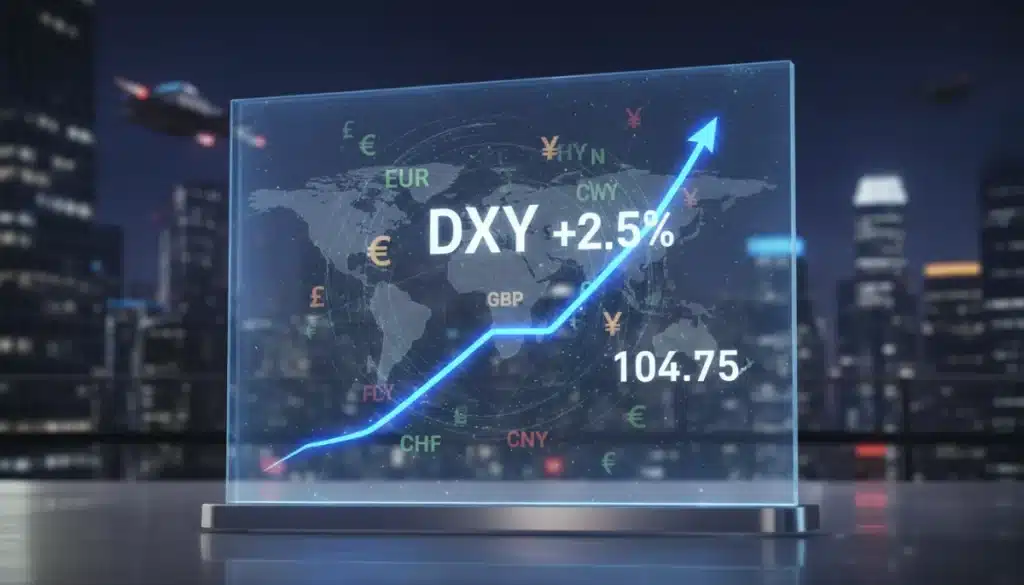
The 2026 US Dollar Index is projected to experience volatility driven by shifting global economic policies, geopolitical events, and evolving monetary strategies.
Understanding the future trajectory of the 2026 US Dollar Index is crucial for investors, businesses, and policymakers worldwide. As we look ahead, a complex interplay of economic indicators, geopolitical tensions, and monetary policy adjustments will undoubtedly shape its movements and exert significant influence on international markets.
Understanding the US Dollar Index (DXY) in 2026
The US Dollar Index (DXY) serves as a vital benchmark, measuring the dollar’s value against a basket of six major world currencies: the Euro, Japanese Yen, British Pound, Canadian Dollar, Swedish Krona, and Swiss Franc. In 2026, its significance remains undiminished, acting as a barometer for global economic health and investor sentiment. Its movements reflect not only the strength of the U.S. economy but also the relative performance of its trading partners and competitors.
For market participants, tracking the DXY is more than just observing a number; it’s about anticipating shifts in trade balances, commodity prices, and capital flows. A stronger dollar can make U.S. exports more expensive, potentially impacting trade deficits, while a weaker dollar can boost export competitiveness. These dynamics are particularly pertinent in 2026 as global supply chains continue to evolve and nations grapple with varying inflation and growth trajectories.
Historical context and current relevance
The DXY’s history is marked by periods of both strength and weakness, often correlating with major global economic events. From the Bretton Woods system’s collapse to the dot-com bubble and the 2008 financial crisis, the dollar’s role as a safe-haven asset has frequently been reaffirmed. In 2026, this safe-haven status is expected to persist, especially amidst ongoing geopolitical uncertainties and potential global economic slowdowns.
- Safe-haven demand: In times of crisis, investors often flock to the dollar, driving up its value.
- Monetary policy divergence: Differing interest rate policies among central banks significantly influence currency valuations.
- Economic performance: Strong U.S. economic growth relative to other major economies tends to bolster the dollar.
The current relevance of the DXY extends to almost every corner of the financial world. From corporate earnings of multinational companies to the cost of importing goods, its fluctuations have tangible effects. Therefore, a thorough understanding of its composition and the forces that move it is indispensable for anyone navigating the 2026 financial landscape.
In conclusion, the DXY in 2026 continues its role as a critical indicator, encapsulating the complex interplay of economic forces and investor sentiment. Its movements are not isolated but deeply intertwined with global trade, investment decisions, and the overall stability of international financial systems, demanding close attention from all market observers.
Key Economic Factors Influencing the Dollar in 2026
Forecasting the 2026 US Dollar Index requires a meticulous examination of several pivotal economic factors. These elements, ranging from interest rates to inflation and GDP growth, are the fundamental drivers that dictate a currency’s strength or weakness. Their interplay creates a dynamic environment where even subtle shifts can lead to significant dollar movements, impacting international markets profoundly.
Interest rate differentials, in particular, remain a cornerstone of currency valuation. If the Federal Reserve maintains a hawkish stance relative to other major central banks, offering higher yields on dollar-denominated assets, capital inflows are likely to strengthen the dollar. Conversely, a more dovish Fed could see the dollar weaken as investors seek higher returns elsewhere. This delicate balance of monetary policy is a constant point of focus for analysts.
Interest rates and monetary policy
The Federal Reserve’s monetary policy decisions will be paramount in 2026. Expectations regarding interest rate hikes or cuts, quantitative tightening or easing, will directly influence the dollar’s attractiveness. The Fed’s dual mandate of maximum employment and price stability will guide its actions, with inflation trends and labor market data playing crucial roles in its deliberations.
- Federal Reserve’s stance: Hawkish policies (higher rates) generally support a stronger dollar.
- Global interest rate convergence/divergence: The spread between U.S. and foreign interest rates drives capital flows.
- Inflation outlook: Persistent inflation could prompt further rate hikes, bolstering the dollar.
Beyond interest rates, inflation rates themselves are critical. Higher inflation in the U.S. relative to other countries can erode the dollar’s purchasing power, potentially weakening it over time, unless offset by aggressive monetary tightening. Conversely, if U.S. inflation is contained while other economies struggle, the dollar could gain strength as a stable store of value.
GDP growth and economic stability
Robust U.S. GDP growth signals a healthy economy, attracting foreign investment and increasing demand for dollar-denominated assets. This inflow of capital naturally supports the dollar’s value. Economic stability, characterized by low unemployment and controlled inflation, further enhances investor confidence in the U.S. economy, making the dollar a preferred currency.
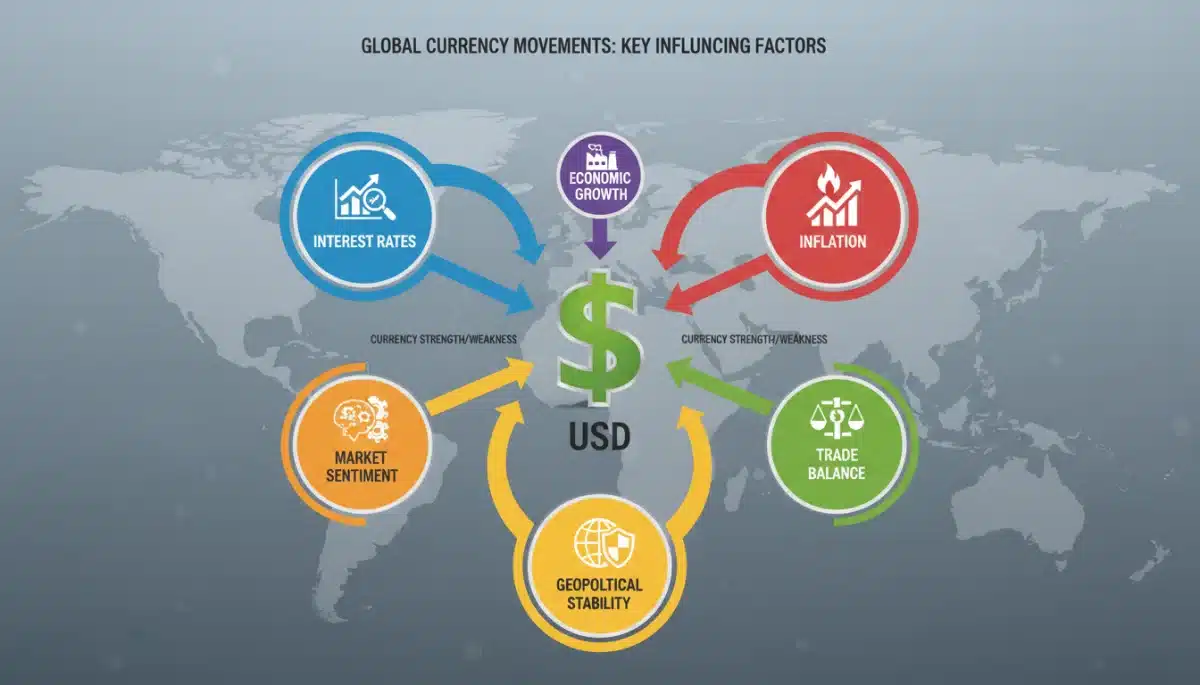
Conversely, signs of economic slowdown or recession could lead to capital outflows and a weaker dollar. The relative performance of the U.S. economy compared to its global counterparts is key. If the U.S. outperforms, the dollar benefits; if it lags, it could face downward pressure. Government debt levels and fiscal policy also contribute to this stability perception.
In conclusion, the 2026 US Dollar Index will be shaped by a confluence of economic factors, with interest rates, inflation, and GDP growth at the forefront. Monitoring these indicators and understanding their interrelationships is essential for anticipating dollar movements and their broader market implications.
Geopolitical Landscape and Its Impact on the Dollar in 2026
The geopolitical landscape of 2026 presents a complex web of potential influences on the 2026 US Dollar Index. Beyond purely economic metrics, global political stability, international conflicts, and trade relations can significantly sway investor sentiment and, consequently, currency valuations. The dollar’s role as a global reserve currency often means it functions as a safe haven during times of international turmoil, but prolonged instability can also present challenges.
Escalating tensions in critical regions, shifts in global alliances, or major trade disputes can trigger capital flight towards perceived safer assets, with the U.S. dollar frequently being a primary beneficiary. This flight-to-safety dynamic can lead to a stronger dollar, even if the underlying U.S. economic fundamentals aren’t exceptionally robust. Conversely, a period of sustained global peace and cooperation might reduce the dollar’s safe-haven appeal, potentially leading to a more balanced or even weaker valuation.
Global conflicts and political stability
Ongoing conflicts or the emergence of new ones in 2026 could significantly bolster demand for the dollar. Investors typically seek stability and liquidity during uncertain times, and the vastness and depth of U.S. financial markets make the dollar an attractive option. However, if the U.S. itself becomes directly involved in major international conflicts, or if its domestic political stability is perceived to be at risk, this safe-haven status could be challenged.
- Increased demand for safe assets: Geopolitical crises often lead to a stronger dollar.
- Impact on trade routes and supply chains: Disruptions can affect global economic activity, indirectly influencing currency.
- Risk perception: Higher global risk typically translates to greater dollar demand.
Domestic political stability within the United States also plays a crucial role. A stable political environment, with predictable policy-making and strong institutions, enhances investor confidence. Conversely, significant internal political divisions or uncertainties could deter foreign investment, potentially weakening the dollar.
Trade relations and economic alliances
The state of international trade relations and the strength of economic alliances will also be critical. Trade wars or protectionist policies, whether initiated by the U.S. or its major partners, can disrupt global trade flows and create volatility in currency markets. The dollar’s value is often intertwined with the health of global trade, given the U.S.’s prominent role in international commerce.
Furthermore, the strengthening or weakening of economic blocs, such as the Eurozone or emerging market alliances, could influence the relative strength of the dollar. Any concerted effort by major economies to reduce reliance on the dollar in international trade or reserves could pose a long-term challenge to its dominance, though such shifts typically unfold over many years.
In summary, the geopolitical landscape in 2026 will be a significant determinant of the 2026 US Dollar Index. From global conflicts to evolving trade dynamics, these non-economic factors will continue to influence investor behavior and the dollar’s perceived value, necessitating careful monitoring.
Technological Advancements and Digital Currencies
As we advance into 2026, the rapid pace of technological innovation, particularly in the realm of digital currencies, presents both opportunities and potential disruptions for the 2026 US Dollar Index. While traditional economic and geopolitical factors will undoubtedly continue to play a dominant role, the growing influence of central bank digital currencies (CBDCs) and stablecoins could introduce new variables into the complex equation of currency valuation.
The proliferation of digital payment systems and cross-border instant settlements could streamline international transactions, potentially reducing the need for traditional intermediary currencies, including the dollar. However, the U.S. dollar’s established network effect and liquidity are formidable advantages that new digital assets will struggle to replicate quickly. The question is not if digital currencies will impact the dollar, but how significantly and over what timeframe.
Central bank digital currencies (CBDCs)
Several major economies, including the U.S., are exploring or developing their own CBDCs. A digital dollar, if successfully implemented, could enhance the efficiency of domestic payments and potentially strengthen the dollar’s international appeal by offering a secure, programmable digital asset. However, the introduction of other major CBDCs, such as a digital Euro or digital Yuan, could foster competition and offer alternatives to the traditional dollar-based financial system.
- Digital dollar implementation: Could enhance efficiency and potentially strengthen the dollar’s global standing.
- Competition from other CBDCs: Digital Euro or Yuan could offer alternatives for international transactions.
- Regulatory frameworks: The development of clear regulations will be crucial for adoption and impact.
The interoperability and acceptance of different CBDCs across borders will be key. If a global standard emerges that facilitates seamless exchange between various digital currencies, it could alter the dynamics of foreign exchange markets. The U.S. approach to its own CBDC, balancing innovation with financial stability, will be closely watched by international observers.
Stablecoins and cryptocurrency adoption
Stablecoins, particularly those pegged to the U.S. dollar, have already gained significant traction as a bridge between traditional finance and the crypto world. In 2026, their continued growth and integration into mainstream financial systems could further solidify the dollar’s digital presence, acting as a digital extension of the greenback. However, regulatory scrutiny and concerns about reserves remain critical challenges.
Increased global adoption of cryptocurrencies, even those not directly pegged to the dollar, could also indirectly affect the DXY. As more capital flows into the crypto ecosystem, it could divert some investment away from traditional fiat currencies. However, given the volatility of many cryptocurrencies, the dollar is likely to retain its role as a primary store of value and unit of account for the foreseeable future.
In conclusion, technological advancements, especially in digital currencies, introduce a new layer of complexity to forecasting the 2026 US Dollar Index. While the dollar’s traditional strengths are robust, the evolving digital landscape demands careful consideration of how these innovations might reshape global financial flows and currency preferences.
Forecasting Scenarios for the 2026 US Dollar Index
Projecting the 2026 US Dollar Index involves considering a range of potential scenarios, each with its own set of assumptions about economic, geopolitical, and technological developments. While precise predictions are inherently challenging, outlining these scenarios provides a framework for understanding the potential volatility and directional bias of the dollar in the coming years. This approach helps stakeholders prepare for various market conditions.
Analysts typically consider three broad scenarios: a strong dollar, a weak dollar, and a relatively stable dollar. Each scenario hinges on different combinations of the factors discussed previously—monetary policy, economic growth, geopolitical stability, and technological adoption. Understanding the triggers and implications of each allows for more robust strategic planning.
Strong dollar scenario
A strong dollar scenario in 2026 would likely be driven by a confluence of factors. This could include continued aggressive monetary tightening by the Federal Reserve to combat persistent inflation, leading to higher U.S. interest rates compared to other major economies. Simultaneously, robust U.S. economic growth, outperforming its global counterparts, would attract significant capital inflows.
- Triggers: Higher U.S. interest rates, strong U.S. economic growth, significant global geopolitical instability.
- Implications: Cheaper imports, more expensive U.S. exports, potential for a wider U.S. trade deficit, downward pressure on commodity prices.
- Impact on international markets: Increased cost of dollar-denominated debt for emerging markets, reduced competitiveness for non-U.S. exporters.
Furthermore, heightened global geopolitical tensions or an international economic crisis could trigger a significant flight to safety, with investors pouring capital into dollar-denominated assets, irrespective of U.S. economic performance. This scenario would make U.S. assets more attractive and could lead to a stronger DXY.
Weak dollar scenario
Conversely, a weak dollar scenario in 2026 could emerge from a different set of circumstances. This might involve the Federal Reserve adopting a more dovish stance, possibly due to a U.S. economic slowdown or recession, leading to interest rate cuts or less aggressive tightening. If other central banks maintain or increase their rates, the interest rate differential would narrow or reverse, making non-dollar assets more appealing.
Another trigger could be a period of sustained global economic growth and stability, reducing the dollar’s safe-haven appeal. A significant improvement in international trade relations or a concerted effort by major economies to diversify away from the dollar in their reserves could also contribute to its weakening. This would make U.S. exports more competitive and potentially alleviate debt burdens for some emerging economies.
Stable dollar scenario
A stable dollar scenario would represent a balance of these forces. The U.S. economy might experience moderate growth, with the Federal Reserve maintaining a neutral monetary policy. Global economic conditions would be relatively stable, without major crises or significant divergences in economic performance among major powers. This scenario would provide predictability but potentially fewer arbitrage opportunities.
In conclusion, forecasting the 2026 US Dollar Index requires a dynamic approach, considering multiple plausible scenarios. Each path has distinct triggers and implications for global trade, investment, and financial stability, making scenario planning an indispensable tool for navigating future currency markets.
Impact on International Markets and Global Economy
The movements of the 2026 US Dollar Index will reverberate throughout international markets and the global economy, influencing everything from commodity prices to corporate earnings and sovereign debt. Given the dollar’s preeminent role as the world’s primary reserve currency and the dominant currency for international trade and finance, its fluctuations have far-reaching consequences that extend well beyond U.S. borders.
A stronger dollar can create headwinds for multinational corporations based outside the U.S. that report earnings in their local currencies, as dollar-denominated profits translate into fewer units of their home currency. Conversely, a weaker dollar can make U.S. goods and services more competitive on the global stage, potentially boosting U.S. exports and improving trade balances. These dynamics underscore the interconnectedness of global finance.
Commodity prices and trade
Most major commodities, such as oil, gold, and industrial metals, are priced in U.S. dollars. Consequently, a stronger dollar makes these commodities more expensive for buyers using other currencies, potentially dampening demand and putting downward pressure on prices. Conversely, a weaker dollar makes commodities cheaper, often leading to increased demand and upward price movements.
- Strong dollar: Higher cost for non-dollar buyers, potential for lower commodity prices.
- Weak dollar: Lower cost for non-dollar buyers, potential for higher commodity prices.
- Trade balances: Affects export competitiveness and import costs for U.S. and international partners.
Beyond commodities, a strong dollar can make U.S. exports more expensive for international buyers, potentially widening the U.S. trade deficit. For countries that export heavily to the U.S., a strong dollar can boost their export earnings. These trade dynamics are critical for global economic growth and stability.
Emerging markets and sovereign debt
Emerging markets are particularly vulnerable to dollar fluctuations. Many developing nations have significant amounts of dollar-denominated debt. A stronger dollar increases the cost of servicing this debt in local currency terms, potentially leading to financial stress, capital outflows, and even sovereign defaults. This can trigger broader financial instability.
Conversely, a weaker dollar can provide much-needed relief to these economies, reducing their debt burden and freeing up resources for domestic investment. The flow of capital to and from emerging markets is often highly sensitive to dollar strength, as investors seek higher returns in a weaker dollar environment or flee to safety during dollar strength.
In conclusion, the impact of the 2026 US Dollar Index on international markets and the global economy will be profound and multifaceted. From trade and commodity prices to the financial health of emerging economies, its movements will continue to be a central determinant of global economic dynamics, requiring constant vigilance and strategic adaptation from all market participants.
Strategies for Navigating Dollar Volatility in 2026
Given the anticipated volatility in the 2026 US Dollar Index, developing robust strategies for navigation is paramount for businesses, investors, and policymakers. Proactive planning and risk management can mitigate adverse impacts and capitalize on potential opportunities arising from dollar fluctuations. Ignoring these dynamics could lead to significant financial repercussions in an increasingly interconnected global economy.
Effective strategies often involve a combination of hedging, diversification, and careful monitoring of economic and geopolitical indicators. The goal is not necessarily to predict every move of the dollar but to build resilience against its potential swings and position oneself advantageously, regardless of the direction it takes.
Hedging strategies for businesses and investors
Businesses engaged in international trade or with significant foreign currency exposures can employ various hedging strategies to protect against adverse dollar movements. Forward contracts, options, and currency swaps are common tools used to lock in exchange rates for future transactions, providing certainty in revenue and cost projections.
- Forward contracts: Lock in an exchange rate for a future date, providing predictability.
- Currency options: Offer the right, but not the obligation, to buy or sell currency at a specific rate, providing flexibility.
- Natural hedging: Matching revenues and expenses in the same currency to reduce exposure.
Investors with international portfolios can also use currency hedging to protect the value of their foreign assets. This involves taking positions that offset potential losses from currency depreciation. For example, a U.S. investor holding European stocks might hedge their Euro exposure to protect against a weakening Euro relative to the dollar.
Diversification and risk management
Diversifying investments across different currencies and asset classes can reduce overall portfolio risk associated with dollar volatility. Holding a mix of dollar-denominated and non-dollar assets can help cushion the impact of a strong or weak dollar. This strategy acknowledges that no single currency or asset is immune to market fluctuations.
Furthermore, continuously monitoring global economic data, central bank communications, and geopolitical developments is crucial. Staying informed allows for timely adjustments to strategies. Risk management also includes stress-testing portfolios and business models against various dollar scenarios to identify potential vulnerabilities and plan contingencies.
In conclusion, navigating the anticipated dollar volatility in 2026 requires a proactive and multifaceted approach. Through strategic hedging, diversification, and diligent risk management, businesses and investors can better protect their interests and position themselves for success in a dynamic international market environment shaped by the 2026 US Dollar Index.
| Key Point | Brief Description |
|---|---|
| DXY Significance | The US Dollar Index remains a crucial benchmark for global economic health and investor sentiment. |
| Economic Drivers | Interest rates, inflation, and GDP growth are primary factors shaping dollar movements. |
| Geopolitical Influence | Global conflicts and trade relations significantly impact the dollar’s safe-haven status. |
| Digital Currency Impact | CBDCs and stablecoins could introduce new dynamics, potentially altering traditional currency flows. |
Frequently Asked Questions about the 2026 US Dollar Index
The primary factor influencing the US Dollar Index in 2026 is expected to be the Federal Reserve’s monetary policy, particularly its stance on interest rates. Divergences in interest rate policies between the U.S. and other major economies will significantly drive capital flows and, consequently, the dollar’s value.
Geopolitical events, such as international conflicts or trade disputes, tend to increase demand for the dollar as a safe-haven asset. During periods of global uncertainty, investors often seek the stability and liquidity of U.S. financial markets, strengthening the dollar’s value.
The impact of CBDCs on the dollar is complex. While a U.S. digital dollar could strengthen its global standing, the introduction of other major CBDCs might offer alternatives, potentially fostering competition. However, the dollar’s established network effect provides a significant advantage.
A strong dollar typically increases the cost of servicing dollar-denominated debt for emerging markets, potentially leading to financial stress and capital outflows. It can also make their exports less competitive and imports more expensive, impacting economic stability.
Businesses can mitigate risks from dollar volatility through hedging strategies like forward contracts or currency options. Diversifying investments across different currencies and continuously monitoring global economic and geopolitical developments also help in managing currency exposure effectively.
Conclusion
The 2026 US Dollar Index is poised to remain a central pillar of international finance, with its movements dictated by a dynamic interplay of monetary policy, economic performance, geopolitical shifts, and emerging technological innovations. While forecasting its exact trajectory is challenging, understanding the key drivers and potential scenarios is essential for global investors, businesses, and policymakers. Proactive strategies, including hedging and diversification, will be crucial for navigating the inherent volatility and leveraging opportunities presented by the dollar’s future movements, ensuring resilience in an ever-evolving global market landscape.
Autor