U.S. Manufacturing 2026: Projections & Future Trends
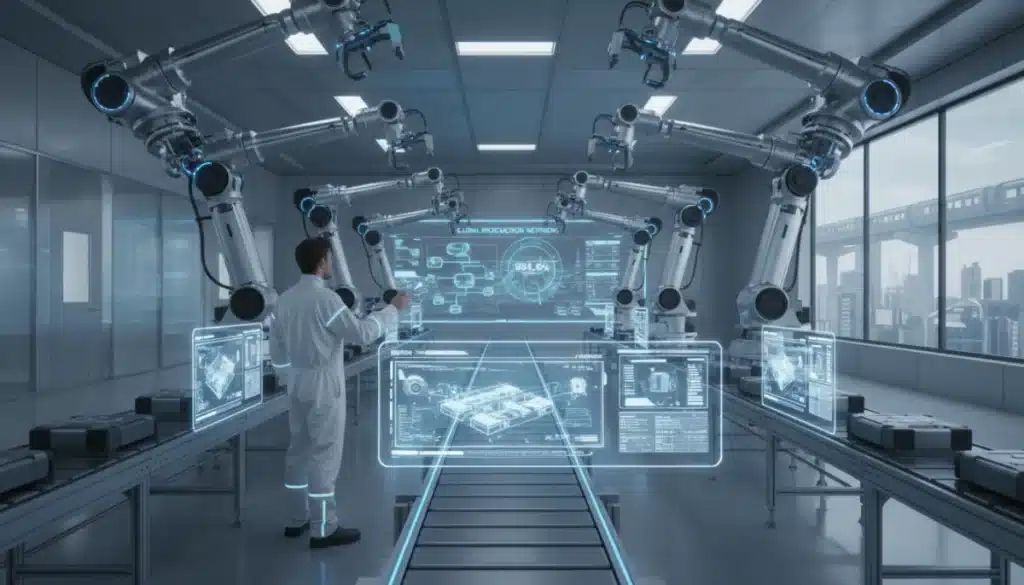
The future of manufacturing in the U.S. by 2026 is set for significant transformation, driven by advanced technologies, reshoring initiatives, and a renewed focus on skilled labor and sustainable practices.
What does the landscape of American industry look like just a few years from now? The Future of Manufacturing in the U.S.: Projections for 2026 and Beyond is not just a topic for economists; it’s a vital conversation for every American, signaling shifts in employment, innovation, and global competitiveness. Let’s delve into the anticipated transformations.
Technological Advancements Driving US Manufacturing Growth
The manufacturing sector in the U.S. is on the cusp of a profound technological revolution. By 2026, the integration of cutting-edge technologies will not only redefine production processes but also enhance efficiency and output significantly. This shift is crucial for maintaining a competitive edge in the global market.
Advanced automation and robotics are at the forefront of this transformation. Factories are increasingly adopting collaborative robots (cobots) that work alongside human employees, taking on repetitive or dangerous tasks. This allows human workers to focus on more complex, value-added activities, improving both safety and productivity.
The Rise of Smart Factories
- Internet of Things (IoT): Sensors embedded in machinery and products provide real-time data, enabling predictive maintenance and optimizing operational workflows. This connectivity minimizes downtime and boosts overall equipment effectiveness.
- Artificial Intelligence (AI) & Machine Learning (ML): AI algorithms analyze vast datasets to identify patterns, predict outcomes, and automate decision-making, from supply chain management to quality control. ML enhances process optimization over time.
- Digital Twins: Virtual replicas of physical assets, processes, or systems allow for simulation and analysis, enabling manufacturers to test scenarios, predict performance, and optimize designs before physical implementation.
These technologies create ‘smart factories’ where production is highly interconnected, data-driven, and adaptive. The ability to quickly respond to market demands and customize products at scale will be a defining characteristic of successful U.S. manufacturers.
In conclusion, technological advancements are not merely incremental improvements but foundational changes reshaping the very essence of manufacturing in the U.S. These innovations promise a more efficient, resilient, and intelligent industrial future.
Reshoring and Supply Chain Resilience by 2026
The vulnerabilities exposed during recent global disruptions have accelerated the trend of reshoring manufacturing operations back to the U.S. By 2026, this movement is expected to solidify, driven by a strategic imperative to strengthen domestic supply chains and reduce reliance on foreign production.
Companies are recognizing the economic and strategic advantages of localizing production. While initial costs might be higher, factors like reduced shipping expenses, faster time-to-market, and greater control over intellectual property are proving compelling. The goal is to build more robust and responsive supply networks.
Government Initiatives and Incentives
Federal and state governments are actively promoting reshoring through various policies and incentives. These include tax breaks, grants for manufacturing innovation, and investments in critical infrastructure. The aim is to create an attractive environment for businesses to invest in U.S.-based production facilities.
- CHIPS and Science Act: This legislation directly supports domestic semiconductor manufacturing, a critical component across many industries, aiming to reduce reliance on overseas chip production.
- Infrastructure Investment and Jobs Act: Funds are allocated to improve transportation networks, energy grids, and broadband access, all vital for efficient manufacturing and supply chain operations.
- Buy American Provisions: Policies that prioritize domestically produced goods for government procurement further stimulate local manufacturing demand.
The emphasis is not just on bringing back jobs, but on fostering a resilient industrial base capable of weathering future global challenges. This strategic shift is about national security and economic stability.
Ultimately, reshoring and the focus on supply chain resilience are transforming the U.S. manufacturing landscape. By 2026, we anticipate a more self-reliant and strategically robust industrial sector, better prepared for an unpredictable world.
Workforce Development and Skills Gap Mitigation
As manufacturing evolves with advanced technologies, the demand for a highly skilled workforce intensifies. Addressing the skills gap is a critical challenge and a key focus for the U.S. manufacturing sector leading up to and beyond 2026. The traditional roles are changing, requiring new competencies in areas like data analytics, robotics programming, and advanced materials.
Educational institutions, industry associations, and private companies are collaborating to develop comprehensive training programs. These initiatives aim to upskill current employees and attract new talent to manufacturing careers, ensuring a robust pipeline of skilled workers.
Adapting Education for the Future of Work
The education system is adapting to meet the future needs of manufacturing. Vocational schools and community colleges are playing a pivotal role, offering specialized courses and apprenticeships that combine theoretical knowledge with practical, hands-on experience.
- Apprenticeship Programs: Structured programs offer on-the-job training alongside classroom instruction, providing participants with valuable skills and recognized certifications.
- STEM Education Emphasis: Increased focus on science, technology, engineering, and mathematics in K-12 and higher education prepares students for technical careers in manufacturing.
- Industry-Academia Partnerships: Collaborations between manufacturers and universities drive research and development, ensuring curricula remain relevant to industry demands.
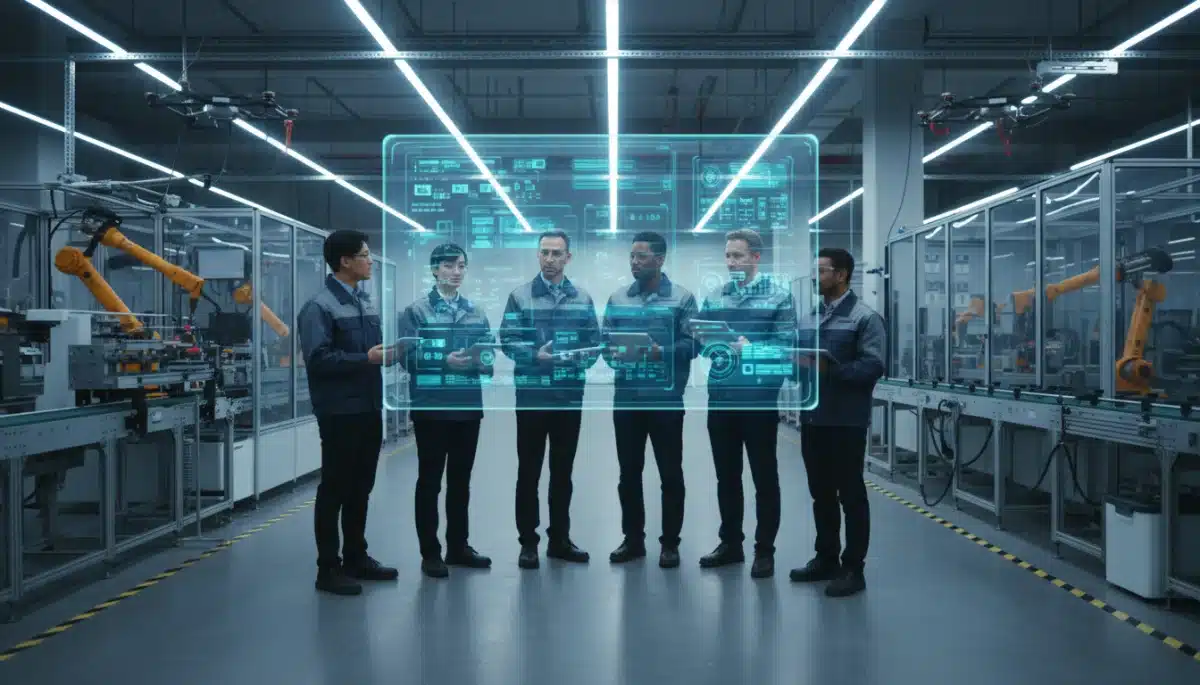
The goal is to cultivate a workforce that is adaptable, technologically proficient, and capable of driving innovation. Investing in human capital is as crucial as investing in technology for the sustained growth of U.S. manufacturing.
In summary, bridging the skills gap through robust workforce development programs is paramount for the future success of U.S. manufacturing. By 2026, a more skilled and adaptable workforce will be a cornerstone of industrial strength.
Sustainability and Green Manufacturing Practices
Environmental responsibility is no longer just a corporate social responsibility initiative; it’s becoming an integral part of manufacturing strategy. By 2026, U.S. manufacturers are expected to significantly ramp up their adoption of sustainable and green practices, driven by consumer demand, regulatory pressures, and the economic benefits of resource efficiency.
This shift encompasses everything from energy consumption and waste reduction to the sourcing of raw materials and the entire product lifecycle. Companies are exploring innovative ways to minimize their environmental footprint while maintaining profitability.
Key Areas of Sustainable Manufacturing
Manufacturers are implementing various strategies to achieve sustainability goals. These efforts often lead to cost savings in the long run, alongside improved brand reputation and compliance with evolving environmental standards.
- Circular Economy Principles: Designing products for longevity, repairability, and recyclability, minimizing waste and maximizing resource utilization. This includes remanufacturing and reusing components.
- Renewable Energy Integration: Investing in solar, wind, and other renewable energy sources to power manufacturing operations, reducing reliance on fossil fuels and lowering carbon emissions.
- Waste Reduction and Recycling: Implementing advanced waste management systems, optimizing material usage, and increasing the recycling of by-products and scrap materials.
The pursuit of green manufacturing is not just an ethical choice but a strategic imperative that positions companies for future success. It aligns with global efforts to combat climate change and meet consumer expectations for environmentally friendly products.
To conclude, sustainability will be a defining feature of U.S. manufacturing by 2026 and beyond. Adopting green practices offers both environmental benefits and significant economic advantages, shaping a more responsible industrial future.
Advanced Materials and Production Techniques
Innovation in materials science and production techniques is fundamentally transforming what can be manufactured and how. By 2026, the U.S. manufacturing sector will increasingly leverage advanced materials and sophisticated production methods to create products that are lighter, stronger, more durable, and highly functional.
These advancements enable breakthroughs in sectors from aerospace and automotive to medical devices and consumer electronics. The ability to engineer materials at the atomic and molecular level opens up possibilities previously unimaginable.
Revolutionizing Production with New Methods
Beyond material science, new production techniques are also gaining traction, allowing for greater customization, complexity, and efficiency in manufacturing processes.
- Additive Manufacturing (3D Printing): This technology is moving beyond prototyping to become a viable method for producing end-use parts, offering unprecedented design freedom, reduced material waste, and rapid iteration.
- Advanced Composites: Lightweight yet incredibly strong materials like carbon fiber composites are replacing traditional metals, leading to more fuel-efficient vehicles and higher-performing products.
- Nanomaterials: Materials engineered at the nanoscale offer unique properties, leading to innovations in coatings, electronics, and medical applications.
These developments are not only about creating better products but also about making manufacturing processes more agile and responsive. The integration of these materials and techniques is crucial for maintaining a competitive edge in high-value manufacturing.
In essence, advanced materials and production techniques are pivotal to the evolution of U.S. manufacturing. By 2026, these innovations will drive the creation of next-generation products and processes, solidifying America’s position at the forefront of industrial innovation.
Policy and Economic Outlook for US Manufacturing
The policy landscape and broader economic conditions will significantly shape the trajectory of U.S. manufacturing through 2026 and beyond. Government decisions regarding trade, taxation, and investment will either bolster or hinder the sector’s growth and global competitiveness.
A stable and predictable economic environment, coupled with supportive policies, is essential for encouraging domestic and foreign investment in manufacturing. Interest rates, inflation, and global economic stability all play critical roles in business planning and expansion.
Key Policy Drivers
Several policy areas are particularly impactful for the manufacturing sector. These include efforts to level the playing field for American companies and foster an environment conducive to innovation and growth.
- Trade Agreements: Policies that ensure fair trade practices and protect intellectual property rights are vital for U.S. manufacturers competing on a global stage.
- Tax Incentives: Research and development tax credits, investment tax credits, and favorable depreciation schedules can stimulate capital expenditure and innovation.
- Regulatory Environment: A balanced regulatory approach that protects workers and the environment without imposing undue burdens on businesses is crucial for manufacturing vitality.
Furthermore, ongoing geopolitical developments and international relations will influence global supply chains and market access, directly impacting U.S. manufacturers. Adaptability to these external factors will be key.
In conclusion, the intersection of supportive policies and a stable economic outlook will be fundamental to realizing the full potential of U.S. manufacturing by 2026. A proactive and strategic approach from policymakers is essential for sustained growth and competitiveness.
| Key Trend | Brief Description |
|---|---|
| Advanced Automation | Increased integration of robotics and AI for enhanced efficiency and precision in production processes. |
| Reshoring Initiatives | Strategic localization of manufacturing to strengthen domestic supply chains and reduce foreign reliance. |
| Skilled Workforce Focus | Development of new training programs to address the evolving skills gap in a technologically advanced sector. |
| Sustainable Practices | Growing adoption of green manufacturing methods, renewable energy, and circular economy principles. |
Frequently Asked Questions About US Manufacturing’s Future
Automation is expected to transform, not eliminate, jobs. While some repetitive tasks may be automated, new roles will emerge in robotics maintenance, data analysis, and advanced manufacturing operations. The focus will shift towards upskilling the workforce for these new opportunities.
AI will be crucial for optimizing production, predictive maintenance, and supply chain management. It will enable smarter decision-making, reduce waste, and enhance efficiency across the entire manufacturing process, leading to more adaptive and responsive factories.
Reshoring is viewed as a sustained trend, driven by geopolitical stability concerns, supply chain resilience, and a desire for greater control over production quality and intellectual property. Government incentives and technological advancements further support this shift toward domestic production.
Manufacturers are increasingly adopting sustainable practices, including integrating renewable energy, implementing circular economy principles, and focusing on waste reduction and recycling. These efforts are driven by regulatory pressures, consumer demand, and the long-term economic benefits of efficiency.
Key challenges include addressing the skills gap for advanced technologies, navigating global economic shifts, ensuring cybersecurity for connected factories, and maintaining competitiveness against international markets. Adapting to rapid technological change is also a continuous hurdle.
Conclusion
The future of manufacturing in the U.S. by 2026 is poised for dynamic growth and transformation. Driven by technological advancements, strategic reshoring initiatives, and a dedicated focus on workforce development and sustainability, the sector is evolving into a more resilient, efficient, and innovative industrial powerhouse. While challenges remain, the proactive embrace of smart factory concepts, advanced materials, and supportive policies positions American manufacturing for a robust and globally competitive future. This evolution promises not only economic prosperity but also a stronger, more secure industrial base for the nation.
Autor