AI for US Job Search: 3 Tools for 2026 Success

Leveraging AI for your US job search in 2026 is essential for optimizing resumes, preparing for interviews, and uncovering hidden career opportunities efficiently.
The landscape of job hunting has dramatically evolved, and in 2026, mastering the art of AI US job search is no longer an option but a necessity. Artificial intelligence tools are reshaping how candidates find opportunities and how companies discover talent, making the process more efficient and targeted than ever before.
Understanding the AI Revolution in US Job Search
The integration of artificial intelligence into the recruitment sector has fundamentally altered traditional job-seeking strategies. Gone are the days when a generic resume and cover letter would suffice. Today, AI algorithms analyze applications, identify keywords, and even predict candidate success, making it imperative for job seekers to adapt.
This shift isn’t just about making the process faster; it’s about making it smarter. AI tools can sift through vast amounts of data, uncovering connections and opportunities that human recruiters might miss. For job seekers, this means a more personalized and effective search, but it also demands a strategic approach to utilizing these technologies.
The evolution of recruitment technology
Recruitment technology has come a long way from simple online job boards. We’ve moved through applicant tracking systems (ATS) that merely filtered keywords to sophisticated AI platforms that understand context, analyze sentiment, and even conduct preliminary interviews. This rapid evolution means that the tools available to job seekers are also becoming more powerful.
- Early ATS systems focused on keyword matching.
- Modern AI platforms analyze behavioral patterns and soft skills.
- Future tools will offer predictive analytics for career paths.
Understanding this technological trajectory helps job seekers anticipate what’s next and how to best position themselves in an AI-driven market. The goal is not to trick the AI, but to collaborate with it, ensuring your unique skills and experiences are accurately represented and highlighted.
In conclusion, the AI revolution in US job search is about empowering both sides of the hiring equation. For job seekers, it’s an opportunity to streamline their efforts and gain a competitive edge, provided they know how to navigate this new technological landscape effectively.
Tool 1: Resume and Cover Letter Optimization with AI
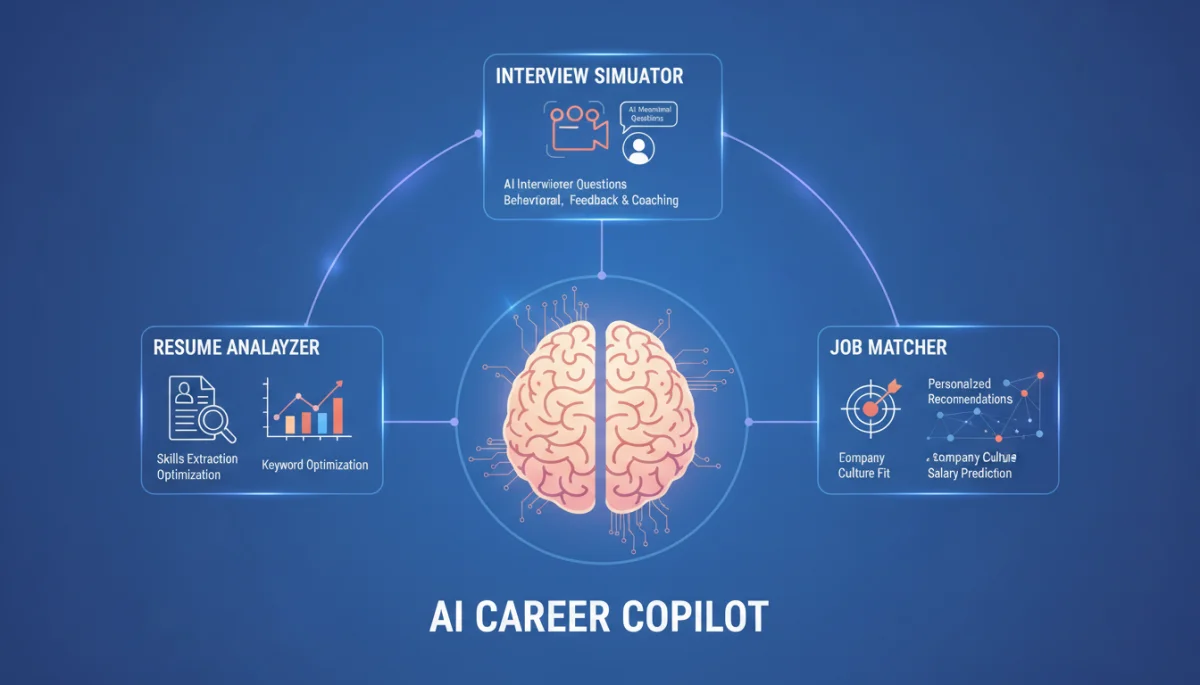
Optimizing your resume and cover letter is the crucial first step in any job application, and in 2026, AI tools have become indispensable for this task. These platforms go beyond basic spell-checking, offering in-depth analysis to ensure your documents resonate with both human recruiters and sophisticated applicant tracking systems.
By leveraging AI, job seekers can transform their application materials from generic submissions into highly targeted documents designed to stand out. This often involves intricate keyword analysis, readability scores, and even suggestions for stronger action verbs that convey impact.
AI-powered resume analysis platforms
Several AI platforms specialize in dissecting resumes to identify areas for improvement. These tools often use natural language processing (NLP) to compare your resume against job descriptions, highlighting gaps and suggesting relevant keywords to include. The goal is to ensure your resume passes initial AI screenings and makes it into the hands of a hiring manager.
- Identifies missing keywords crucial for specific roles.
- Suggests stronger action verbs to enhance impact.
- Analyzes formatting for ATS compatibility.
- Provides readability scores and length recommendations.
These platforms often offer real-time feedback, allowing for immediate adjustments and iterative improvements. The benefit is a resume that not only looks good but is also strategically optimized for the digital age of recruitment.
Crafting compelling cover letters with AI assistance
Beyond resumes, AI tools can also assist in crafting highly personalized and compelling cover letters. Instead of using generic templates, these AI assistants can analyze the job description, the company’s values, and even your resume to generate tailored content that speaks directly to the employer’s needs. This saves significant time and ensures consistency across your application materials.
The key here is personalization. AI helps you move away from one-size-fits-all cover letters to documents that demonstrate a genuine understanding of the role and company. This level of detail can significantly increase your chances of securing an interview.
In essence, AI for resume and cover letter optimization acts as a personal career coach, guiding you to present your best self on paper. It ensures your application is not just seen, but understood and valued by recruitment systems.
Tool 2: AI for Interview Preparation and Skill Assessment
The interview stage is often the most nerve-wracking part of the job search, but in 2026, AI tools are revolutionizing how candidates prepare. These platforms offer realistic simulations, behavioral analysis, and even skill assessments, providing invaluable feedback to boost your confidence and performance.
Moving beyond mock interviews with friends, AI-driven platforms provide objective, data-backed insights into your communication style, body language, and content delivery. This allows for targeted practice and improvement, ensuring you’re fully prepared for any type of interview, from initial screenings to final rounds.
Virtual interview simulators
AI-powered virtual interview simulators mimic real-life interview scenarios, complete with common questions, time constraints, and even virtual interviewers. These tools record your responses and then provide immediate feedback on various aspects of your performance.
- Analyzes verbal cues, such as filler words and speech pace.
- Evaluates non-verbal communication, including eye contact and posture.
- Provides content analysis, assessing clarity and relevance of answers.
The ability to practice in a low-stakes environment and receive constructive criticism from an unbiased AI can significantly reduce interview anxiety and refine your responses. It’s like having an infinite number of practice sessions tailored to your specific needs.
AI-driven skill assessment platforms
Many companies are now incorporating AI-driven skill assessments into their hiring processes. These tools evaluate technical skills, problem-solving abilities, and even soft skills through interactive challenges and scenarios. For job seekers, practicing with similar AI tools can be a game-changer.
By engaging with these platforms, you can identify areas where your skills might need a refresh or where you can articulate your expertise more effectively. This proactive approach ensures you’re not caught off guard during an actual assessment and can confidently demonstrate your capabilities.
Ultimately, AI for interview preparation transforms the interview from a daunting challenge into a manageable, even enjoyable, opportunity to showcase your strengths. It equips you with the insights needed to make a lasting positive impression.
Tool 3: Advanced Job Matching and Networking with AI
Finding the right job isn’t just about applying; it’s about finding the right opportunities and connecting with the right people. In 2026, AI tools are excelling at advanced job matching and supercharging professional networking, often uncovering roles you might not have found through traditional methods.
These platforms leverage sophisticated algorithms to analyze your profile, skills, and career aspirations against a vast database of job openings and professional connections. The result is a highly personalized stream of relevant opportunities and networking suggestions, moving beyond simple keyword searches.
AI-powered job aggregators and personalized recommendations
While traditional job boards exist, AI-powered aggregators take personalized recommendations to a new level. They learn from your interactions, preferences, and even your career trajectory to suggest jobs that align not just with your skills, but also with your long-term goals and cultural fit.
These tools can identify ‘hidden’ jobs that aren’t widely advertised or suggest roles in emerging industries that perfectly match your transferable skills. This proactive matching saves countless hours of sifting through irrelevant postings.
AI for strategic networking and connection building
Networking remains vital, and AI is making it more strategic. Certain AI tools can analyze your professional network and suggest individuals who could be valuable connections for your career goals. They might identify alumni from your university in target companies, or professionals in your desired field who share common interests.
- Identifies key individuals in target companies or industries.
- Suggests personalized outreach messages for connections.
- Tracks engagement and potential relationship growth.
- Uncovers mutual connections for warm introductions.
This intelligent networking allows you to focus your efforts on building meaningful relationships rather than cold outreach. It transforms networking from a numbers game into a strategic, targeted endeavor, significantly enhancing your chances of discovering opportunities through referrals.
In summary, AI for advanced job matching and networking acts as your personal career scout and connector, ensuring you’re always aware of the best opportunities and connected to the people who can help you seize them.
Integrating AI Tools into Your Overall Job Search Strategy
While each AI tool offers distinct advantages, their true power emerges when integrated into a cohesive job search strategy. In 2026, a successful job hunt isn’t about using one AI tool, but about creating a synergistic approach where different technologies complement each other, forming a powerful ecosystem for career advancement.
This integration involves understanding how each tool contributes to the larger goal: getting hired. From initial self-assessment to final negotiation, AI can play a supportive role, streamlining processes and providing data-driven insights at every turn.
Creating a holistic AI-powered workflow
Imagine a workflow where your resume optimization tool feeds insights into your interview preparation, and your job matching AI learns from your successful applications. This interconnectedness allows for continuous improvement and a highly adaptive job search.
For instance, feedback from an AI interview simulator might highlight a weakness in articulating your project management skills. You can then use this insight to refine your resume with the optimization tool, ensuring your application materials and interview responses are perfectly aligned.
Best practices for maximizing AI benefits
- Start with self-assessment: Use AI tools to honestly evaluate your skills and identify areas for growth.
- Iterate constantly: Don’t just use an AI tool once; refine your materials and practice repeatedly based on feedback.
- Personalize AI output: While AI can generate content, always review and personalize it to reflect your authentic voice.
- Combine with human interaction: AI enhances, but doesn’t replace, the value of human networking and mentorship.
- Stay updated: The AI landscape evolves rapidly; regularly explore new tools and features.
By thoughtfully integrating these tools and adhering to best practices, job seekers can navigate the complexities of the 2026 job market with unparalleled efficiency and effectiveness. The goal is to leverage AI as an intelligent assistant, not a substitute for your unique skills and personality.
In conclusion, a strategic integration of AI tools creates a robust and adaptive job search framework, maximizing your chances of success in a competitive environment. It’s about working smarter, not just harder.
Ethical Considerations and Future Trends of AI in Hiring
As AI becomes more ingrained in the US job search, it’s crucial to address the ethical implications and anticipate future trends. While AI offers immense benefits, concerns around bias, data privacy, and the ‘human touch’ in hiring remain paramount. Navigating these complexities responsibly will define the future of recruitment.
Understanding these ethical considerations isn’t just for developers; it’s for job seekers too. Being aware of potential biases in AI systems can help you tailor your approach, and staying informed about future trends allows you to remain ahead of the curve.
Addressing bias in AI recruitment tools
One of the primary ethical concerns is the potential for AI systems to perpetuate or even amplify existing human biases. If trained on biased historical data, AI might inadvertently discriminate based on gender, race, or socioeconomic background. Companies are actively working to mitigate these biases, but awareness is key.
Job seekers should be mindful that some AI tools might prioritize certain keywords or experiences over others, potentially leading to an uneven playing field. This reinforces the importance of using diverse tools and continually refining your application based on broad feedback.
The future of AI in career development by 2026 and beyond
Looking ahead, AI’s role in career development is set to expand significantly. We can expect more sophisticated predictive analytics, offering personalized career path recommendations based on market trends and individual skill development. AI might also play a larger role in continuous learning, suggesting courses and certifications to keep skills current.
- AI will offer more proactive career pathing and upskilling recommendations.
- Increased use of AI for soft skill development and emotional intelligence coaching.
- Greater emphasis on transparent and explainable AI in hiring processes.
- Integration of AI with virtual reality for immersive interview experiences.
The human element will always be crucial, but AI will serve as an increasingly powerful co-pilot in navigating career journeys. The challenge and opportunity lie in harnessing its capabilities responsibly and ethically.
In conclusion, while AI presents transformative opportunities for the US job search, a critical understanding of its ethical dimensions and future trajectory is essential for both job seekers and employers to ensure a fair, effective, and human-centric recruitment landscape.
Maximizing Your Online Presence with AI
In 2026, your online professional presence is more critical than ever, and AI tools can significantly enhance how you present yourself across various digital platforms. From optimizing your LinkedIn profile to curating your digital portfolio, AI can ensure your professional brand is strong, consistent, and appealing to potential employers.
A strong online presence is not just about having a profile; it’s about having one that is discoverable, engaging, and accurately reflects your skills and aspirations. AI helps you achieve this by analyzing platform algorithms and suggesting improvements that increase visibility and impact.
AI for LinkedIn profile optimization
LinkedIn remains a cornerstone of professional networking and job discovery. AI tools can analyze your LinkedIn profile against industry best practices and target job descriptions, suggesting improvements for your headline, summary, experience sections, and skills. They can help you identify trending keywords that recruiters are searching for.
These tools often provide insights into how your profile ranks for specific searches, allowing you to fine-tune your content for maximum visibility. A well-optimized LinkedIn profile is essentially a living resume that AI can help you maintain and elevate.
Curating your digital portfolio with AI assistance
For many professions, a digital portfolio is essential. AI can assist in curating and organizing your work, ensuring it’s presented in the most impactful way. Some AI platforms can even analyze your projects and suggest which ones to highlight based on target roles or industry trends.
Furthermore, AI can help you write compelling descriptions for your portfolio pieces, ensuring they clearly articulate your contributions and the results achieved. This transforms a collection of work into a powerful narrative of your professional capabilities.
In conclusion, leveraging AI to maximize your online presence ensures that your digital footprint is not just visible, but also strategically aligned with your career goals, making you more attractive to recruiters and potential collaborators.
| Key Aspect | AI’s Role in 2026 |
|---|---|
| Resume/Cover Letter | Optimizes for ATS, suggests keywords, enhances readability and impact. |
| Interview Preparation | Provides virtual simulations, behavioral analysis, and skill assessment feedback. |
| Job Matching/Networking | Offers personalized job recommendations and strategic connection building. |
| Online Presence | Optimizes LinkedIn profiles and assists in curating digital portfolios. |
Frequently asked questions about AI in job searching
AI tools analyze your resume against job descriptions, suggesting keywords, action verbs, and formatting improvements. They ensure your document passes ATS filters and highlights your most relevant skills, making it more impactful for human recruiters.
Yes, AI interview simulators provide objective feedback on verbal and non-verbal cues, content clarity, and response timing. This practice helps reduce anxiety, refines your answers, and builds confidence for actual interviews, making them highly effective.
Absolutely. AI-powered job matching tools analyze your profile and career goals against vast databases, often identifying ‘hidden’ or emerging roles that align with your skills but aren’t widely publicized through traditional channels.
Key concerns include potential biases in AI algorithms, data privacy, and the risk of depersonalizing the hiring process. Job seekers should be aware of these issues and prioritize tools from reputable developers committed to ethical AI practices.
AI is increasingly important for strategic networking. It can suggest valuable connections based on your goals, identify mutual contacts, and even help craft personalized outreach messages, making your networking efforts more targeted and effective.
Conclusion
The integration of AI into the US job search in 2026 marks a pivotal shift, transforming traditional methods into a more streamlined, data-driven, and personalized experience. By strategically leveraging AI tools for resume optimization, interview preparation, and advanced job matching, job seekers can gain a significant competitive advantage. As technology continues to evolve, embracing these intelligent assistants will not only enhance efficiency but also empower individuals to navigate the complex job market with greater confidence and success. The future of career advancement is intrinsically linked to our ability to harness AI responsibly and effectively.
Autor