REITs in 2026: Performance Across US Submarkets Analyzed

Analyzing Real Estate Investment Trusts (REITs) in 2026 across US submarkets reveals diverse performance drivers, offering investors strategic opportunities.
As we approach 2026, understanding the trajectory of Real Estate Investment Trusts (REITs) in 2026: Analyzing Performance Across US Submarkets becomes crucial for investors seeking to optimize their portfolios. The real estate landscape is ever-evolving, shaped by economic shifts, technological advancements, and demographic changes, making a granular analysis of submarket performance more vital than ever.
Understanding the 2026 REIT Landscape
The year 2026 promises a dynamic environment for REITs, influenced by a complex interplay of macroeconomic factors and localized real estate trends. Investors must look beyond broad market movements and delve into the specifics of various US submarkets to identify true value and potential growth areas. This granular approach is essential for navigating the opportunities and challenges ahead.
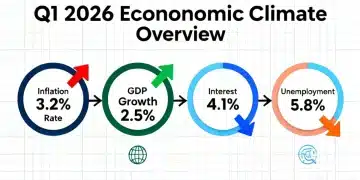
Economic indicators such as inflation rates, interest rate policies, and employment figures will continue to exert significant pressure on real estate valuations and, consequently, REIT performance. However, the impact will not be uniform. Certain submarkets, driven by unique demographic shifts or industry concentrations, may demonstrate resilience or even accelerated growth, while others face headwinds.
Key Economic Drivers for REITs in 2026
- Interest Rate Stability: Predicted stabilization or slight decreases in interest rates could reduce borrowing costs for REITs, positively impacting profitability and expansion.
- Inflation Management: Effective inflation control will be vital. REITs in sectors with strong pricing power, like certain residential or industrial segments, may fare better.
- Job Growth Trends: Strong employment growth in specific metropolitan areas will bolster demand for office, retail, and residential properties, supporting local REIT performance.
Furthermore, the ongoing evolution of work-from-home policies and e-commerce continues to reshape demand for office and retail spaces, while simultaneously boosting logistics and data center REITs. Understanding these underlying shifts at a submarket level is paramount for informed investment decisions. Each sector within the REIT universe will experience these forces differently, necessitating a tailored analytical approach.
Residential REITs: Suburban vs. Urban Dynamics
Residential REITs are poised for an interesting year in 2026, with a clear divergence in performance expected between suburban and urban submarkets. The post-pandemic shift in living preferences continues to mature, influencing rental demand and property values in distinct ways. Suburban areas, once experiencing a boom, might see normalization, while urban centers could witness a resurgence.
Many urban core submarkets, particularly those with strong job markets and cultural amenities, are experiencing renewed interest. Younger demographics and a return to office mandates are driving up demand for apartments and condominiums. This resurgence, however, is often met with supply constraints, leading to upward pressure on rents and occupancy rates for urban residential REITs.
Emerging Trends in Residential Submarkets
- Sun Belt Growth: Submarkets in the Sun Belt region, such as Phoenix, Austin, and Raleigh, are expected to continue their robust growth due to favorable climates, lower costs of living, and strong job migration.
- Coastal City Rebound: Major coastal urban centers like New York, Los Angeles, and San Francisco are projected to see a stronger rebound in residential demand, especially in luxury and high-density apartment sectors.
- Affordable Housing Initiatives: Increased focus on affordable housing development in various submarkets could present new opportunities for REITs specializing in this segment, driven by both social need and government incentives.
Conversely, suburban residential submarkets, while still strong, may face increased competition from new developments and a more balanced supply-demand dynamic. Investors should closely monitor population shifts and local economic health to accurately forecast performance. The nuances between single-family rental REITs and multi-family REITs within these areas will also be critical to differentiate.
Industrial and Logistics REITs: The E-commerce Backbone
Industrial and logistics REITs are expected to maintain their strong performance in 2026, continuing to benefit from the relentless expansion of e-commerce and the need for resilient supply chains. The demand for modern warehousing, distribution centers, and last-mile facilities remains robust across various US submarkets. This sector has proven to be a cornerstone of the digital economy.
Key submarkets near major transportation hubs, ports, and dense population centers are particularly attractive. These areas offer strategic advantages for logistics operations, minimizing transit times and optimizing delivery networks. The push for faster delivery speeds and increased inventory levels in response to past supply chain disruptions further fuels this demand.
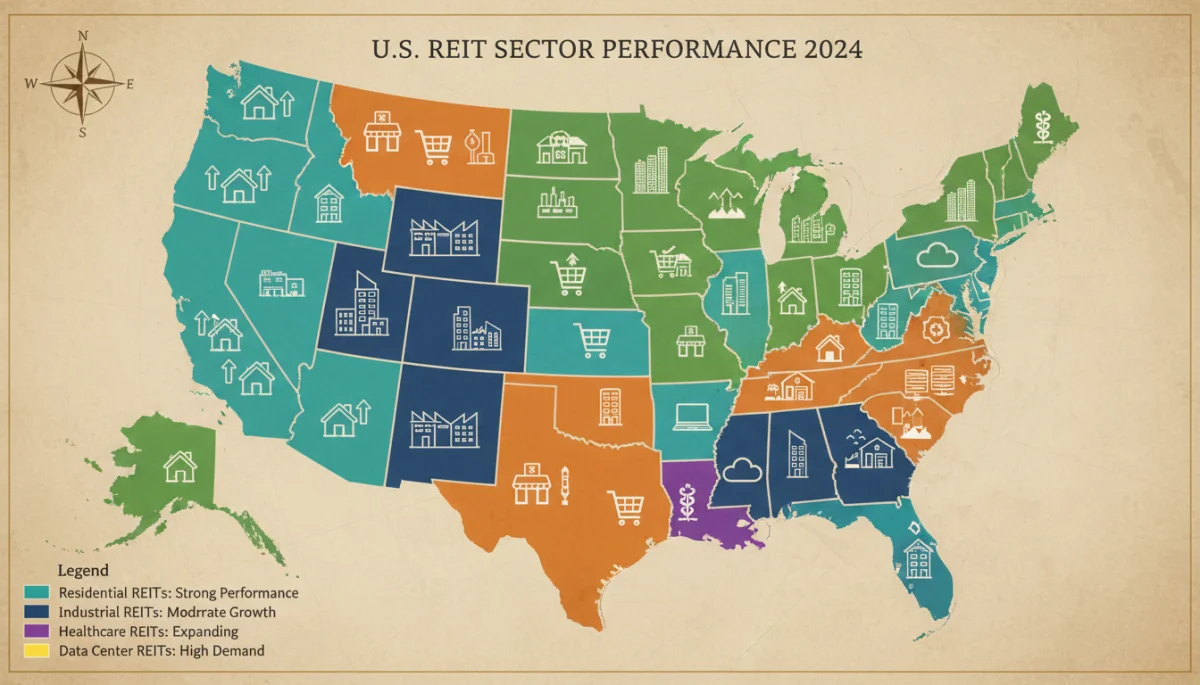
Technological advancements, such as automation and robotics in warehouses, are also influencing the design and location of new industrial facilities. REITs that invest in state-of-the-art, high-tech logistics properties are likely to outperform. Furthermore, the diversification of manufacturing back to North America, known as reshoring, could also boost demand for industrial spaces in specific regions.
High-Growth Industrial Submarkets
- Inland Empire, California: Continues to be a critical hub for logistics and distribution due to its proximity to major ports and vast consumer market.
- Dallas-Fort Worth, Texas: Benefits from a central US location, strong population growth, and a robust transportation infrastructure, making it ideal for national distribution.
- Atlanta, Georgia: A key gateway to the Southeast, with excellent rail, road, and air connectivity, driving demand for industrial space.
The strategic importance of industrial real estate in supporting global commerce ensures its continued prominence within the REIT sector. Investors should focus on REITs with diversified portfolios in high-demand submarkets and those investing in properties equipped for future logistical needs. The ability to adapt to evolving supply chain strategies will be a key differentiator for success.
Office REITs: Navigating Hybrid Work Models
Office REITs face a complex and evolving landscape in 2026, as the hybrid work model continues to redefine the purpose and demand for office space. While some submarkets are experiencing a slow but steady return to office, others are grappling with persistent vacancies and declining lease rates. The flight to quality, where companies seek premium, amenity-rich spaces, is a dominant trend.
Submarkets with strong innovation economies and a high concentration of tech or life sciences companies may see greater resilience in office demand. These sectors often benefit from collaborative work environments and a stronger emphasis on in-person interaction. Conversely, submarkets heavily reliant on traditional corporate tenants might struggle more.
Factors Influencing Office REIT Performance
- Return-to-Office Mandates: Corporate policies on hybrid work schedules will significantly impact occupancy rates. Submarkets with clear mandates are showing stronger recovery.
- Class A+ vs. Class B/C: Premium, modern office buildings with advanced amenities are outperforming older, less appealing properties. This creates a two-tiered market.
- Population Density and Transit: Urban submarkets with excellent public transit and high walkability scores are more attractive for companies looking to draw employees back to the office.
The repurposing of older office buildings into residential or mixed-use developments could help alleviate some of the oversupply in struggling submarkets, but this process is slow and capital-intensive. Investors in office REITs must conduct thorough due diligence, focusing on submarkets with strong economic fundamentals, diverse tenant bases, and properties that cater to the evolving needs of modern businesses. Flexibility and adaptability in office design will be paramount for long-term success.
Retail REITs: Adapting to Consumer Behavior
Retail REITs in 2026 are characterized by a continued adaptation to changing consumer behaviors, particularly the ongoing shift between brick-and-mortar and online shopping. While the narrative of retail’s demise is overstated, the sector demands strategic investment in experience-driven centers and necessity-based retail. Submarkets with strong population growth and higher disposable incomes are proving more resilient.
Enclosed malls, particularly those that have not undergone significant redevelopment, may continue to face challenges. However, open-air shopping centers, grocery-anchored plazas, and mixed-use developments that integrate retail with residential and entertainment components are performing well. These properties offer convenience and a community hub experience that online shopping cannot replicate.
Resilient Retail Submarkets
- Suburban Growth Corridors: Areas experiencing significant residential development often create new demand for local retail and services, bolstering performance for neighborhood centers.
- Tourist Destinations: Submarkets with strong tourism economies, such as Orlando or Las Vegas, will see continued demand for experiential retail and entertainment-focused properties.
- High-Density Urban Areas (Experiential Retail): Urban submarkets that can support unique, high-end, or experiential retail concepts, often integrated into larger mixed-use projects, tend to thrive.
The ability of retail REITs to innovate and create compelling consumer experiences will be crucial for sustained success. This includes incorporating technology, offering unique tenant mixes, and focusing on convenience. Investors should seek out REITs that demonstrate a clear strategy for adapting to modern retail trends and have portfolios concentrated in thriving, forward-looking submarkets. The diversification of tenant types, moving beyond traditional apparel, is also a key indicator of adaptability.
Specialty REITs: Data Centers and Healthcare
Specialty REITs, particularly those focused on data centers and healthcare, are expected to exhibit robust performance in 2026. These sectors are driven by powerful, long-term secular trends that transcend typical economic cycles. Data centers are the backbone of the digital economy, while healthcare facilities are essential due to an aging population and advancements in medical technology.
Data center REITs benefit from the insatiable demand for cloud computing, artificial intelligence, and digital connectivity. Submarkets with access to reliable power grids, fiber optic networks, and cooler climates are prime locations for these facilities. The need for secure, high-capacity data storage and processing is only projected to grow, making this a high-conviction sector.
Growth Drivers for Specialty REITs
- Digital Transformation: The global shift towards digital services and cloud infrastructure underpins the continuous demand for data center capacity.
- Aging Demographics: An increasing elderly population in the US drives demand for senior living facilities, medical office buildings, and hospitals, benefiting healthcare REITs.
- Technological Advancements in Healthcare: New medical treatments and technologies necessitate specialized facilities, creating opportunities for healthcare REITs in relevant submarkets.
Healthcare REITs, encompassing medical office buildings, hospitals, senior living facilities, and skilled nursing centers, are supported by an aging demographic and consistent demand for medical services. Submarkets with strong healthcare infrastructure and growing senior populations are particularly attractive. These specialized sectors offer defensive characteristics and strong growth potential, making them appealing to investors seeking diversification and stability in their REIT portfolios. The long-term leases often associated with these properties provide predictable income streams.
| Key Sector | 2026 Outlook |
|---|---|
| Residential REITs | Urban rebound, Sun Belt growth; suburban normalization. |
| Industrial REITs | Strong e-commerce demand, logistics hubs thriving. |
| Office REITs | Hybrid work challenges, flight to quality; innovation hubs resilient. |
| Specialty REITs | Data centers and healthcare sectors show robust growth. |
Frequently Asked Questions About REITs in 2026
Primary drivers include interest rate stability, inflation management, and specific submarket job growth. E-commerce expansion and evolving work models also significantly impact industrial, retail, and office REITs, necessitating a nuanced approach to investment analysis.
Sun Belt cities like Phoenix and Austin, along with a rebound in major coastal urban centers such as New York and Los Angeles, are anticipated to show strong residential REIT growth, driven by job migration and renewed urban interest.
Hybrid work will continue to differentiate office REIT performance. Submarkets with strong innovation economies and Class A+ properties will likely thrive, while those with older, less amenity-rich buildings may face higher vacancies and pressure on lease rates.
Yes, retail REITs remain viable, especially those focused on experience-driven centers, grocery-anchored plazas, and mixed-use developments. Success hinges on adapting to consumer behavior shifts and offering compelling in-person experiences, moving beyond traditional enclosed malls.
Specialty REITs, particularly data centers and healthcare, are attractive due to strong secular trends. Data centers benefit from digital transformation, while healthcare REITs are supported by aging demographics and medical advancements, offering defensive and growth characteristics.
Conclusion
The landscape for Real Estate Investment Trusts in 2026 is one of nuanced opportunities and challenges, deeply tied to the specific performance of US submarkets. Investors who meticulously analyze individual sectors—from the resurgence of urban residential to the steadfast growth of industrial, and the adaptive strategies of retail and office—will be best positioned to capitalize. Specialty REITs like data centers and healthcare continue to offer compelling long-term prospects. A strategic, informed approach, focusing on granular submarket analysis and understanding underlying economic and demographic shifts, will be key to navigating the evolving real estate investment environment and achieving optimal returns.
Autor