2026 Report: Declining College Enrollment & Workforce Impact
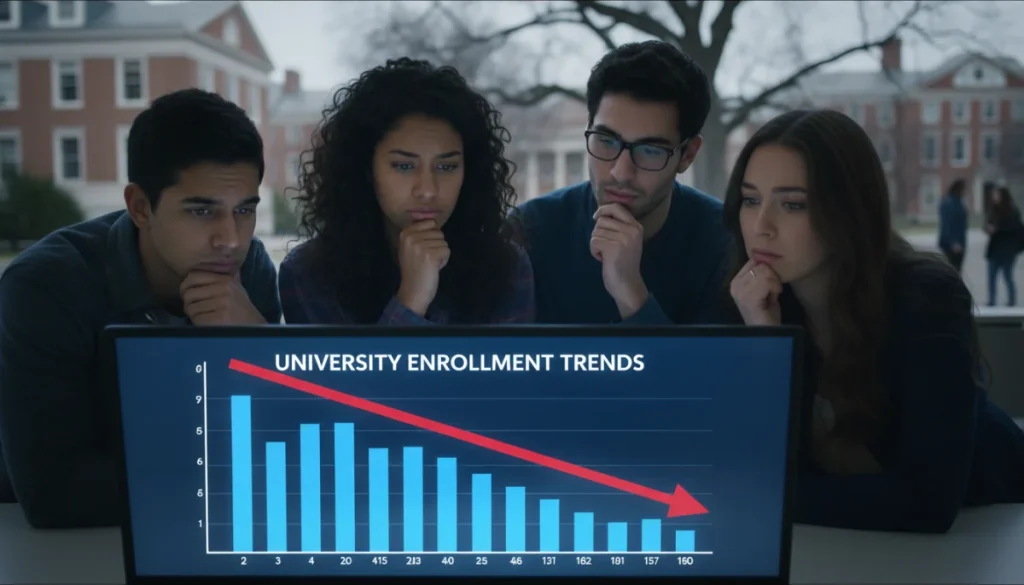
The U.S. Department of Education’s 2026 report highlights a 5% decline in college enrollment, posing significant challenges for future workforce development.
The recent U.S. Department of Education 2026 report has unveiled a concerning trend: a declining college enrollment by 5% across the nation. This isn’t just a statistic; it’s a pivotal moment demanding our attention, as its implications for workforce development are far-reaching and complex, reshaping the landscape of American higher education and employment.
understanding the 2026 enrollment decline
The U.S. Department of Education’s 2026 report presents a stark reality: a 5% drop in college enrollment nationwide. This decline isn’t an isolated incident but rather the culmination of several underlying factors that have been brewing within the educational and economic spheres for years. Understanding these drivers is crucial to formulating effective responses and mitigating the long-term consequences on our society.
key contributing factors to the decline
Several elements have converged to create this significant downturn. Economic pressures, shifting perceptions of higher education value, and the rising cost of tuition have all played substantial roles.
- Rising Tuition Costs and Student Debt: The escalating cost of a college degree continues to be a major deterrent. Many prospective students and their families are weighing the substantial financial burden against the perceived return on investment, opting for alternative paths or delaying enrollment.
- Changing Value Proposition of Higher Education: There’s a growing skepticism about whether a traditional four-year degree is the only or best path to career success. This sentiment is fueled by the availability of high-paying jobs that do not require a bachelor’s degree.
- Strong Job Market for Non-Graduates: A robust job market, particularly in trades and skilled labor, offers immediate employment opportunities and competitive wages, drawing individuals away from academic pursuits.
- Demographic Shifts: A shrinking pool of high school graduates in certain regions also contributes to the overall decline, reflecting broader demographic changes within the U.S. population.
The report underscores that these factors are interconnected, creating a complex web of challenges for institutions of higher learning. Addressing this decline requires a multifaceted approach that considers both the economic realities students face and the evolving demands of the job market.
economic repercussions of reduced college attendance
The 5% decline in college enrollment, as highlighted by the U.S. Department of Education’s 2026 report, extends far beyond individual educational choices. It carries significant economic repercussions that will ripple through local communities, state budgets, and the national economy. Fewer college graduates can lead to a less skilled workforce, impacting innovation and competitiveness.
impact on state and local economies
Universities are often economic anchors in their communities, providing jobs, attracting research funding, and stimulating local businesses. A sustained decline in enrollment means less tuition revenue, which can lead to budget cuts, fewer faculty positions, and reduced spending on campus facilities, directly harming local economies.
- Reduced Tax Revenues: Fewer graduates entering higher-paying jobs can eventually lead to lower income tax contributions, affecting state and federal budgets.
- Brain Drain in Certain Regions: Areas heavily reliant on universities for talent may experience a ‘brain drain’ as fewer students graduate and establish careers locally, hindering regional economic growth.
- Innovation Stagnation: Universities are hubs of research and development. Reduced enrollment can mean fewer researchers and less innovation, which is critical for economic advancement in a globalized world.
Furthermore, the long-term effects on social mobility and wealth distribution cannot be overstated. Higher education has historically been a pathway to upward mobility, and a contraction in enrollment could exacerbate existing inequalities, creating a more stratified society. The economic health of the nation is intrinsically linked to the educational attainment of its populace.
workforce development implications and future challenges
The most immediate and perhaps most critical implication of the declining college enrollment by 5% is its direct impact on workforce development. As the U.S. Department of Education’s 2026 report suggests, a smaller pipeline of college graduates means potential shortages in sectors traditionally reliant on highly educated professionals, such as healthcare, engineering, and advanced technology. This creates a significant challenge for employers seeking skilled talent.
adapting to a shifting talent pool
Businesses will need to adapt their recruitment and training strategies to account for a different kind of talent pool. This could involve increasing investments in internal training programs, partnering with vocational schools, or rethinking job requirements to prioritize skills over traditional degrees.
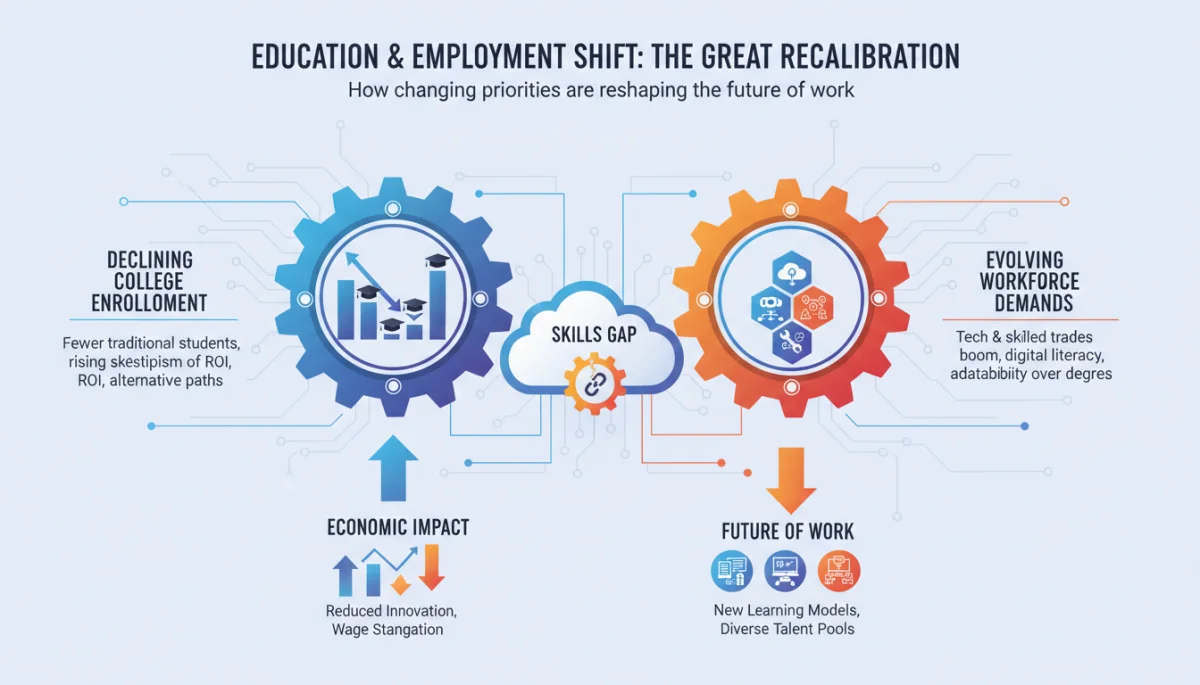
The shift also highlights the growing importance of alternative credentials and skill-based hiring. As fewer individuals pursue four-year degrees, certifications, apprenticeships, and micro-credentials become increasingly valuable. Employers may find themselves needing to validate skills through practical assessments rather than relying solely on academic transcripts.
Moreover, industries that require highly specialized knowledge may face significant hurdles in filling critical roles. This could lead to increased competition for a smaller pool of qualified candidates, potentially driving up labor costs and slowing down innovation. The nation’s ability to maintain its competitive edge in a global economy hinges on a robust and adaptable workforce.
The challenge for workforce development lies in bridging the gap between available talent and industry needs, ensuring that the U.S. economy remains dynamic and productive despite these shifts in educational attainment.
policy responses and educational reforms needed
In light of the U.S. Department of Education’s 2026 report on declining college enrollment by 5%, a proactive and comprehensive policy response is imperative. This isn’t just about tweaking existing programs; it requires a fundamental rethinking of how higher education is structured, funded, and valued. Policymakers must collaborate with educational institutions, industry leaders, and students to forge a path forward that addresses the root causes of the decline and strengthens the future workforce.
strategies for increasing accessibility and affordability
One of the primary areas for reform is making higher education more accessible and affordable. This includes re-evaluating financial aid structures, exploring tuition freezes or reductions, and increasing funding for public institutions. Innovative financing models, such as income-share agreements, could also play a role in reducing the upfront financial burden on students.
- Streamlining Financial Aid: Simplifying the FAFSA process and increasing grant availability can make a significant difference for low-income students.
- Investing in Public Institutions: Greater state and federal funding for public universities could help stabilize tuition costs and maintain quality.
- Promoting Dual Enrollment Programs: Expanding opportunities for high school students to earn college credits can reduce the overall cost and time required for a degree.
Beyond affordability, policies should also focus on enhancing the perceived value of a college degree. This could involve better alignment between curricula and workforce needs, increased opportunities for experiential learning, and stronger career services support. Emphasizing the long-term benefits of higher education, both personal and professional, is crucial.
Ultimately, the goal of policy reform should be to create an educational ecosystem that is responsive to the needs of students and the economy, ensuring that higher education remains a viable and attractive option for all Americans.
the role of vocational training and alternative pathways
The declining college enrollment by 5% highlighted in the U.S. Department of Education’s 2026 report underscores the increasing importance of vocational training and alternative educational pathways. As traditional four-year degrees become less universally appealing or accessible, these alternative routes are emerging as vital components of a robust workforce development strategy. They offer practical skills, often at a lower cost and in a shorter timeframe, directly addressing immediate industry needs.
expanding and promoting skilled trades
Vocational schools, community colleges, and apprenticeship programs are already playing a crucial role in preparing individuals for high-demand jobs in sectors like manufacturing, construction, healthcare support, and information technology. These programs provide hands-on training and often lead directly to employment, offering a clear return on investment for students.
- Increased Funding for Vocational Programs: Government and private sector investment can help modernize facilities, expand course offerings, and attract qualified instructors.
- Public Awareness Campaigns: Changing societal perceptions about skilled trades is essential. Promoting the value and career opportunities in these fields can attract more students.
- Industry Partnerships: Closer collaboration between educational institutions and businesses can ensure that training programs are directly aligned with current industry standards and future demands.
Moreover, the concept of lifelong learning is gaining traction, with micro-credentials and specialized certifications allowing individuals to upskill or reskill throughout their careers. These flexible learning options cater to a diverse range of learners, from recent high school graduates to experienced professionals seeking new opportunities. The emphasis is shifting from a single, continuous educational journey to a more modular and adaptable approach.
Embracing and investing in these alternative pathways is not just a response to declining college enrollment; it’s a forward-thinking strategy to build a more diverse, resilient, and skilled workforce capable of meeting the evolving demands of the 21st-century economy.
long-term societal impact and future outlook
The U.S. Department of Education’s 2026 report, detailing the declining college enrollment by 5%, paints a picture of a potential paradigm shift with profound long-term societal impacts. This trend is not merely a transient fluctuation; it signals a fundamental re-evaluation of educational values and career pathways that will reshape American society for decades to come. Understanding these broader implications is crucial for strategic planning and ensuring national prosperity.
reshaping social mobility and equity
Historically, a college degree has been a significant driver of social mobility, offering pathways to higher income, better health outcomes, and increased civic engagement. A sustained decline in enrollment could potentially widen existing societal gaps if alternative pathways do not equally provide these opportunities for all demographic groups. Ensuring equitable access to quality education, regardless of the chosen path, becomes paramount to prevent deepening inequalities.
Furthermore, the decline could influence the intellectual capital of the nation. Universities are not just job training centers; they are institutions that foster critical thinking, research, and cultural development. A reduction in the number of individuals pursuing higher education might affect the nation’s capacity for innovation, scientific discovery, and informed public discourse. This could have subtle but significant effects on the nation’s global standing and its ability to address complex challenges.
The future outlook, while challenging, also presents opportunities for innovation in education and workforce development. It necessitates a more integrated approach where traditional universities, vocational schools, and industry collaborate closely to create a diverse ecosystem of learning and professional growth. The goal should be to cultivate a society where multiple pathways lead to success, ensuring that every individual has the opportunity to contribute meaningfully to the economy and society at large.
Ultimately, the long-term societal impact will depend on how effectively policymakers, educators, and industries adapt to these evolving educational landscapes and foster an harmonious, skilled, and adaptable population.
| Key Point | Brief Description |
|---|---|
| Enrollment Decline | U.S. Department of Education’s 2026 report shows a 5% drop in college enrollment. |
| Economic Impact | Reduced tax revenues, potential brain drain, and innovation stagnation. |
| Workforce Challenges | Shortages in skilled labor, need for new training and recruitment strategies. |
| Policy Solutions | Focus on affordability, accessibility, and promoting vocational pathways. |
Frequently Asked Questions
▼
The 5% decline, as reported by the U.S. Department of Education in 2026, is significant because it indicates a major shift in how Americans approach higher education. It signals potential challenges for workforce development, economic growth, and social mobility, requiring immediate attention from policymakers and educators.
▼
Several factors contribute to the decline, including rising tuition costs, increasing student debt, a shifting perception of the value of a traditional four-year degree, a strong job market for non-graduates, and underlying demographic changes affecting the pool of high school graduates.
▼
The decline could lead to shortages in highly skilled sectors like healthcare and technology, traditionally filled by college graduates. It necessitates employers to rethink recruitment and training, potentially increasing reliance on vocational training and alternative credentialing to fill critical roles.
▼
Policy responses focus on increasing accessibility and affordability through financial aid reform, tuition stabilization, and greater investment in public institutions. There’s also an emphasis on aligning curricula with workforce needs and promoting alternative educational pathways like vocational training.
▼
Vocational training and alternative pathways are increasingly vital complements to traditional degrees, not replacements. They offer practical skills for high-demand jobs and cater to diverse learning needs, contributing to a more flexible and robust workforce alongside higher education institutions.
Conclusion
The U.S. Department of Education’s 2026 report on the 5% decline in college enrollment serves as a critical call to action for the nation. This trend demands a multifaceted approach, integrating policy reforms, educational innovation, and a renewed focus on diverse pathways to success. By addressing affordability, enhancing the value proposition of all educational routes, and adapting workforce development strategies, the U.S. can navigate these challenges, ensuring a skilled populace and sustained economic prosperity for the future.
Autor