Consumer Spending Patterns in 2026: What a 5% Shift Means for the U.S. Economy
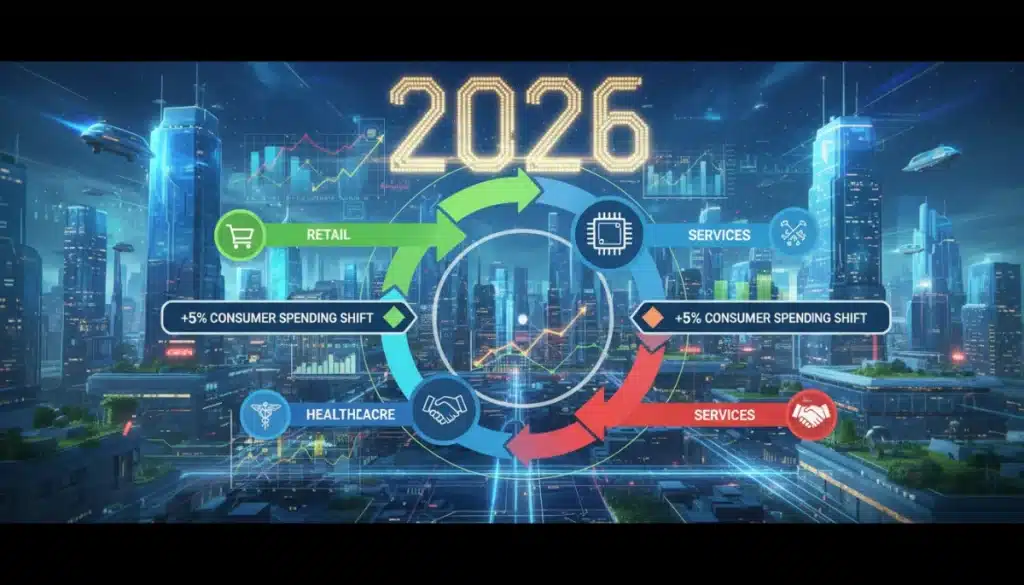
A 5% shift in U.S. consumer spending patterns in 2026 could significantly reallocate trillions of dollars, profoundly impacting industries from retail to technology, influencing inflation, employment, and overall economic growth.
The landscape of the U.S. economy is perpetually shaped by the decisions of its consumers. In 2026, a seemingly modest 5% shift in consumer spending patterns in 2026 could trigger a profound ripple effect, reallocating trillions of dollars and reshaping industries. What might this mean for the nation’s economic future?
Understanding the Magnitude of a 5% Shift
A 5% shift might sound small, but when applied to the colossal U.S. economy, its implications are anything but. Consumer spending typically accounts for roughly 70% of the nation’s Gross Domestic Product (GDP). With a GDP projected to be well over $28 trillion by 2026, a 5% reallocation within this spending can mean hundreds of billions of dollars changing hands, moving from one sector to another.
This isn’t merely about less money being spent overall, but rather a redirection of purchasing power. Such a movement can create significant winners and losers across various industries, influencing job markets, investment strategies, and even the geopolitical standing of the U.S. Understanding where this shift might occur is crucial for businesses, policymakers, and individual households alike.
The Trillion-Dollar Question: Where Does the Money Go?
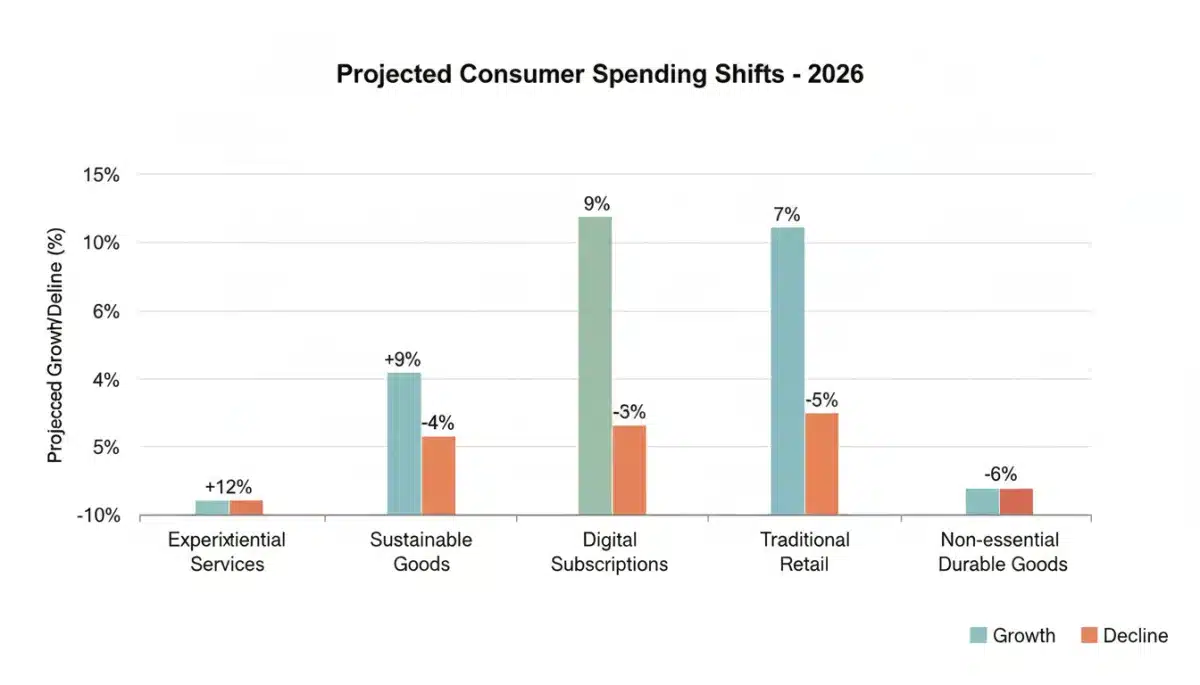
Forecasting the precise direction of a 5% shift involves analyzing a multitude of socioeconomic and technological factors. Will consumers prioritize experiences over material goods, or will sustainability drive purchasing decisions? The answers to these questions will dictate which sectors flourish and which face headwinds.
- Digital Transformation Acceleration: Continued investment in online services, subscription models, and digital entertainment.
- Healthcare and Wellness Focus: Increased spending on preventative care, personalized medicine, and mental health services.
- Sustainable and Ethical Consumption: A growing preference for products and services with a lower environmental footprint and fair labor practices.
- Experiential Economy Growth: More disposable income directed towards travel, dining out, and leisure activities.
The impact of such a shift extends beyond immediate revenue. It influences supply chains, encourages innovation in specific areas, and can even alter the skills demanded in the labor force. Businesses that anticipate these changes and adapt quickly will be best positioned to thrive in the evolving economic landscape.
Sectoral Impacts: Winners and Losers
When consumers change their spending habits, industries feel the tremors. A 5% shift in consumer spending patterns in 2026 will undoubtedly create a discernible divide between sectors that gain momentum and those that struggle to maintain their footing. The key lies in identifying the underlying drivers of these changes.
Consider the retail sector, a traditional barometer of consumer health. If spending shifts towards online platforms and direct-to-consumer models, brick-and-mortar stores, especially those slow to adapt, could face significant challenges. Conversely, e-commerce giants and logistics companies would likely see substantial gains.
Emerging Industries and Resilience
Certain industries are inherently better positioned to capture new spending. Technology, particularly areas like artificial intelligence, virtual reality, and personalized digital services, stands to benefit. Similarly, sectors focused on addressing climate change, such as renewable energy and sustainable agriculture, could see increased investment driven by consumer demand for eco-friendly products.
- Technology and AI: Continued growth in demand for advanced gadgets, software, and AI-powered services.
- Green Economy: Increased expenditure on electric vehicles, energy-efficient homes, and sustainable food options.
- Personalized Services: Rising popularity of bespoke experiences, customized products, and niche service providers.
On the other hand, industries reliant on outdated business models or those producing non-essential goods with high environmental costs might see reduced demand. This necessitates a proactive approach from businesses to innovate, diversify, and align their offerings with new consumer values.
Inflationary Pressures and Price Dynamics
A significant reallocation of consumer spending patterns in 2026 will inevitably influence inflation. When demand surges in specific sectors, prices within those sectors are likely to rise. Conversely, sectors experiencing reduced demand might face downward price pressure or be forced to offer discounts to attract buyers.
This uneven inflation can create a complex economic environment. While overall inflation might remain stable, specific categories of goods and services could see sharp price increases, impacting household budgets disproportionately. For example, if healthcare spending rises significantly, medical costs could outpace other consumer prices.
Policymakers will need to closely monitor these shifts to implement targeted monetary and fiscal policies. Traditional inflation measures might not fully capture the localized price surges that a 5% spending shift could generate, requiring a more granular approach to economic management. Businesses, too, must be agile in their pricing strategies, understanding that consumer price sensitivity might increase in some areas while decreasing in others.
Labor Market Repercussions
The ripple effect of shifting consumer spending extends directly to the labor market. As some industries expand and others contract, the demand for specific skills and types of employment will change. This can lead to job creation in booming sectors and job displacement in declining ones, posing challenges for workforce adaptation.
For instance, if consumers increasingly favor digital entertainment, jobs in content creation, software development, and cybersecurity will likely grow. Meanwhile, traditional manufacturing or retail roles might see a reduction. This necessitates a focus on reskilling and upskilling initiatives to ensure the workforce can meet the demands of the evolving economy.
The Rise of the Gig Economy and Specialized Skills
A shift in spending could further accelerate the growth of the gig economy, as businesses seek flexible labor to respond to fluctuating demand. Specialized skills, particularly in technology, data analysis, and green industries, will become increasingly valuable. Educational institutions and vocational training programs will play a critical role in preparing individuals for these new opportunities.
- Demand for Tech Skills: Software developers, data scientists, and AI specialists will be highly sought after.
- Green Jobs Expansion: Roles in renewable energy installation, sustainable product design, and environmental consulting.
- Healthcare Innovation: Increased need for professionals in telemedicine, genetic counseling, and personalized health tech.
- Logistics and E-commerce: Growth in supply chain management, delivery services, and online customer support.
Government policies aimed at fostering labor mobility and providing robust unemployment benefits will be crucial in mitigating the adverse effects of job displacement and supporting a smooth transition for workers.
Investment Strategies and Financial Markets
For investors, a 5% shift in consumer spending patterns in 2026 presents both risks and opportunities. Capital markets will react to the projected performance of different sectors, leading to reallocations of investment funds. Companies that align with new consumer priorities will likely see their valuations rise, while others may face downward pressure.
Smart investors will be looking beyond traditional market indicators to identify emerging trends and allocate capital accordingly. This might mean favoring companies with strong ESG (Environmental, Social, and Governance) credentials, firms at the forefront of technological innovation, or those catering to the growing experiential economy.
The financial sector itself will also need to adapt, developing new financial products and services to support these evolving industries. This could include specialized lending for sustainable projects or new investment vehicles for digital assets. The overall stability of financial markets will depend on the orderly transition of capital and the ability of institutions to manage new forms of risk.
Policy Implications and Economic Resilience
Governments and central banks will face significant challenges in navigating the economic shifts brought about by changing consumer spending. Proactive policy measures will be essential to ensure economic stability, foster inclusive growth, and minimize disruption. This includes fiscal policies that support innovation and worker retraining, and monetary policies that manage localized inflationary pressures.
Investing in infrastructure that supports new economic models, such as high-speed internet and sustainable transportation, will be critical. Additionally, regulatory frameworks will need to evolve to keep pace with rapid technological advancements and new forms of commerce. The goal will be to create an environment where the U.S. economy can adapt and thrive amidst these dynamic changes.
Building a Resilient Economic Future
To enhance economic resilience, policymakers might consider several strategies:
- Targeted Tax Incentives: Encouraging investment in green technologies and emerging high-growth sectors.
- Education and Workforce Development: Funding programs for reskilling and upskilling the labor force to meet future demands.
- Supply Chain Diversification: Reducing reliance on single sources to mitigate risks from sudden shifts in demand or geopolitical events.
- Support for Small Businesses: Providing resources and guidance for small and medium-sized enterprises to adapt to new consumer trends.
A collaborative approach involving government, industry, and academia will be vital in preparing the U.S. economy for the transformations implied by a significant shift in consumer spending. Understanding these potential changes now allows for strategic planning and proactive adaptation, ensuring sustained prosperity.
| Key Aspect | Impact Description |
|---|---|
| Economic Reallocation | Hundreds of billions of dollars redirected across U.S. economic sectors. |
| Sectoral Shifts | Growth in tech, green economy, and experiences; challenges for traditional retail. |
| Labor Market Changes | Increased demand for specialized skills, potential job displacement in some areas. |
| Policy Response | Need for adaptive fiscal and monetary policies, investment in infrastructure and education. |
Frequently Asked Questions About 2026 Consumer Spending
The potential shift is driven by evolving consumer values, technological advancements, and economic pressures. Factors include a greater emphasis on sustainability, the continued rise of digital services, personalized experiences, and a growing focus on health and wellness post-pandemic.
Industries poised to benefit include technology (AI, digital services), the green economy (renewable energy, sustainable products), healthcare innovation, and the experiential economy (travel, leisure, personalized services). Companies aligning with these trends will likely see growth.
Households could experience varied impacts. While some goods might become cheaper due to reduced demand, prices in high-demand sectors like specialized healthcare or sustainable products could rise. Job opportunities will shift, requiring adaptation and potentially new skill acquisition for many.
Government policy will be crucial for stability. This includes implementing targeted fiscal incentives for growth sectors, investing in workforce retraining programs, adapting regulatory frameworks for new technologies, and ensuring economic resilience against potential disruptions from these shifts.
Yes, risks include potential job displacement in declining sectors, uneven inflation across different consumer categories, and challenges for businesses slow to adapt. Financial market volatility and the need for new investment strategies also present risks that require careful management.
Conclusion
The prospect of a 5% shift in consumer spending patterns in 2026 represents more than just a statistical anomaly; it signifies a fundamental reorientation of economic priorities within the U.S. economy. This shift, driven by evolving consumer values and technological advancements, will reallocate significant wealth, creating both unprecedented opportunities and considerable challenges across industries. While sectors like technology, sustainable goods, and experiential services are poised for growth, traditional retail and carbon-intensive industries may face substantial pressure to innovate or risk obsolescence. Proactive adaptation from businesses, strategic investment from financial markets, and responsive policy-making from government entities will be paramount in ensuring that the U.S. economy not only navigates these changes but emerges stronger and more resilient. Understanding and anticipating these trends today is the first step toward shaping a prosperous economic future for all.
Autor